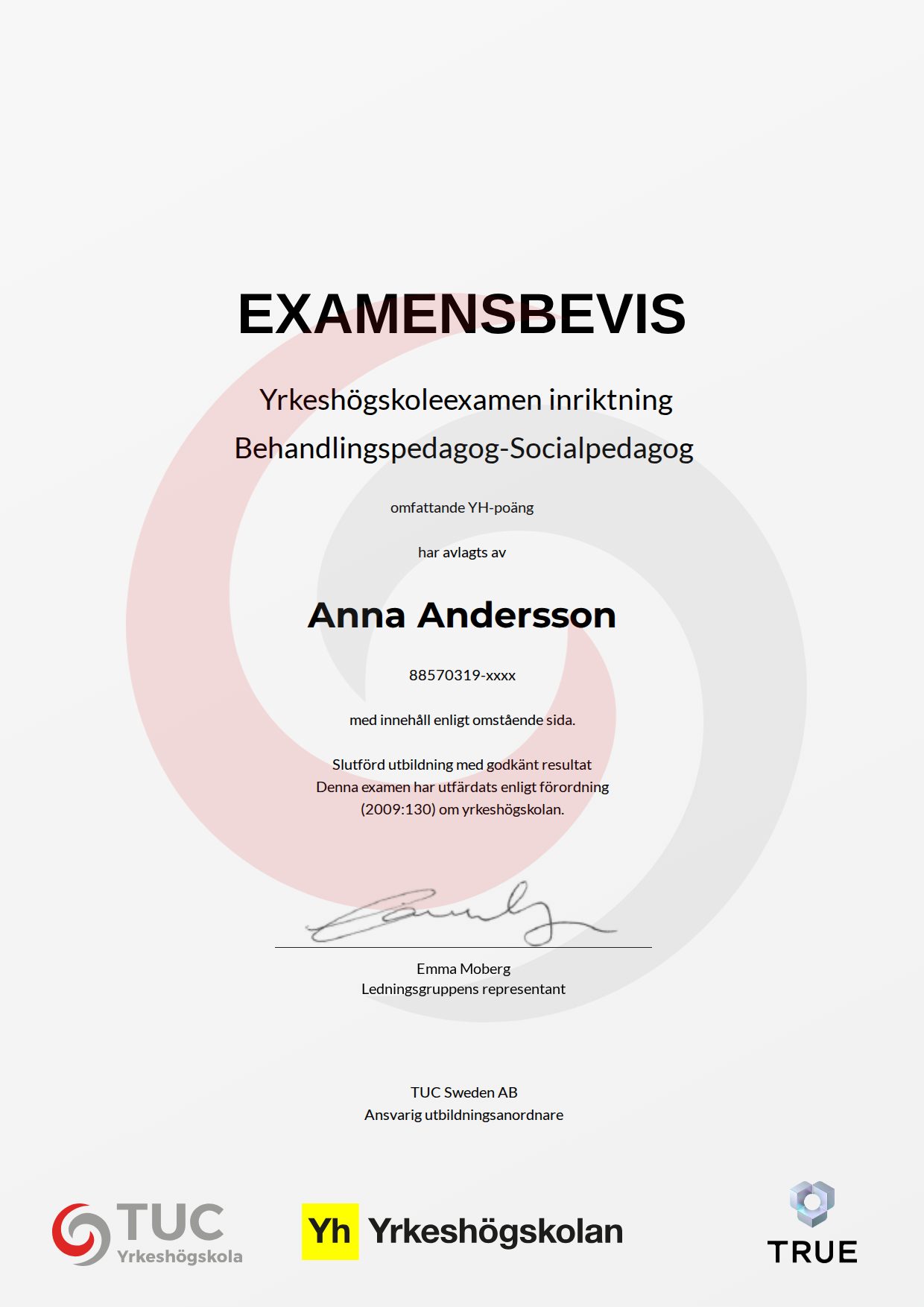
Description of the content and goals of the training
After completing the training, the student should have knowledge of
1. The foundations, methods and approaches of treatment
2. Cognitive approaches to different forms of addiction
3. Neuropsychiatric conditions and how they arise
4. The Convention on the Rights of the Child and Socialstyrelsen's competence goals for work with children and young people
5. Sociology, psychology, pedagogy and psychiatry
6. Relevant legislation, documentation and record keeping
7. Outdoor education, green therapy and pedagogy, the importance of physical health for mental well-being
8. Ethnicity and integration
9. Ethics and gender-related aspects linked to the profession and a specific target group
10. Situational leadership
11. Rights and obligations in the work environment field
12. The need for and importance of continuous personal development and learning
13. The structure of the Swedish welfare society with a focus on the individual and the family
14. The importance of keeping up with current research and development in the field of social work
After completing the training, the student should have the skills to
1. Meet clients from different target groups and with different difficulties
2. Actively carry out treatment work
3. Solve problems from a salutogenic perspective and give constructive feedback through feedback, mirroring and reformulation
4. Independently assess personal development and competence needs
5. Handle conflicts in a solution-focused way
6. Apply situational leadership
7. Critically evaluate and examine the methods and routines of different organizations
8. Critically examine information and methods in scientific work and justify their analysis
9. Communicate assignments and solutions in a field of work or study in at least one foreign language
10. Acquire and apply knowledge in their own personal development
After completing the training, the student should have the competence to
1. Work responsibly and independently as a treatment worker at HVB homes, state institutions, social services, in municipal outpatient or field work, in Kriminalvården (the Swedish Prison and Probation Service), child and adolescent psychiatry, women's shelters and homes for unaccompanied refugee children
2. Adapt method and theoretical perspectives to clients' different needs and support measures
3. Identify complex cultural differences and be able to bridge conflicts between these differences
4. Work responsibly at resource schools as a resource educator in compulsory school and upper secondary school
5. Independently carry out risk analyses of clients and the work environment
6. Independently lead and carry out informal debriefing in their own work group
7. Independently lead and organize the work of the work group both in institutions and in outpatient settings, as well as in outdoor environments
8. Collaborate in order to work in different psychosocial work environments
9. Work on the basis of science and proven experience