Part of the YH programme IT-säkerhetstekniker at TUC Yrkeshögskola. This course cannot be applied for on its own. Programme code: ITSÄK23LIN.
The course Project Organisation in IT gives you basic and in-depth knowledge of modern, agile project methodology for IT projects. You learn the differences between agile and traditional project methodology and how they developed historically. The course covers methods, tools and client technologies with a focus on business value and user experience, and how to plan schedules, budgets and group dynamics in projects. You also practise carrying out a feasibility study for an upcoming project.
Duration: 15 weeks
Language: Swedish
Level: Intermediate
CSN-eligible
Time commitment: 15 YH credits, about 3 weeks of full-time study
The goal of the course is to give students insight into modern agile project methodology and an introduction to a project model for future projects. The goal of the course is that students gain knowledge of the concepts of agile and traditional project methodology and their history. Students also gain knowledge of methods and tools. During the course, students will learn the value of using different client technologies, with particular regard to business value and the impact on the end user. The goal of the course is also to give students the knowledge to work with schedules, budgets and group dynamics in projects. Students should also be able to carry out a feasibility study.
The goal of the course is to give students insight into modern agile project methodology and an introduction to a project model for future projects. The goal of the course is that students gain knowledge of the concepts of agile and traditional project methodology and their history. Students also gain knowledge of methods and tools. During the course, students will learn the value of using different client technologies, with particular regard to business value and the impact on the end user. The goal of the course is also to give students the knowledge to work with schedules, budgets and group dynamics in projects. Students should also be able to carry out a feasibility study.
What you will learn
What you learn.
You can explain the differences between agile and traditional project methodology and their historical background.
You can apply common project methods and tools in an IT project.
You can assess the value of different client technologies from a business value and end-user perspective.
You can draw up schedules and budgets for a project.
You have insight into the importance of group dynamics for a project's success.
You can carry out a feasibility study for an upcoming project.
Curriculum
How the course is built.
Agile and traditional project methodology
History, basic concepts and differences between agile and traditional ways of working in IT projects.
Methods and tools
Review of common project methods and tools that support project work.
Client technologies and business value
How the choice of client technology affects business value and the end user's experience.
Schedule and budget
Planning, following up and adjusting schedules and budgets during a project.
Group dynamics in projects
How group dynamics affect collaboration and results in project groups.
Feasibility study
Carrying out a feasibility study as a basis for an upcoming project.
Target audience
Who is this for?
The course is aimed at YH students in IT-related programs who want to work with project management or project organisation in IT.
What "verified" means here
Verified credential.
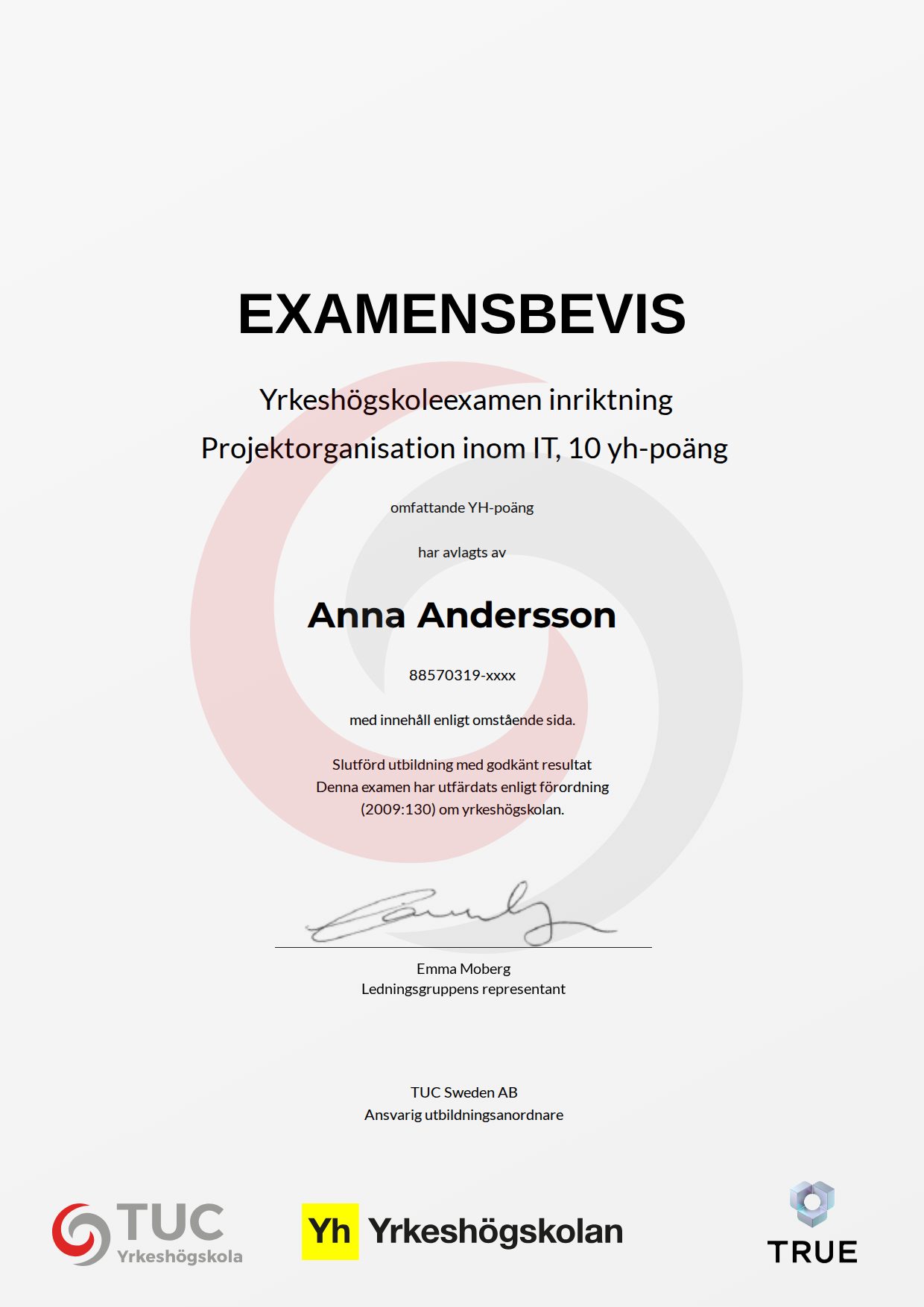
When you complete the course, TUC Yrkeshögskola issues your certificate. Your name, the course content and the issue date are encrypted and secured on blockchain, so it cannot be changed, and anyone can check that it is genuine.
100% Verifiable certificates Secured on blockchain