Part of the YH programme IT Security Specialist at TUC Yrkeshögskola. This course cannot be applied for on its own. Programme code: ITS24STO.
The Basic IT Security course gives you the basics of how to protect the systems and data of IT environments. You learn to analyse and manage security risks related to the internet and cloud services, as well as techniques such as Single Sign On and two- or three-factor authentication. The course covers malicious code, firewalls, encryption, PKI and digital certificates. The course is part of TUC's YH programme for IT security specialists and lays the foundation for the advanced courses in the field.
Duration: 30 weeks
Language: Swedish
Level: Beginner
CSN-eligible
Time commitment: 30 YH credits, approx. 6 weeks of full-time study
The course is about how to protect the systems and data of the IT environment. The course should provide sufficient knowledge of analysing and managing the security risks that the internet and the introduction of cloud services bring. This includes techniques for improved user authorisation and verification through Single Sign On and two- and three-factor authentication.
The course also covers malicious code, firewalls, encryption and signing, PKI and digital certificates, and methods for detecting and fixing vulnerable communication with remote hosts at a basic level.
The course also covers how, in the professional role of IT security specialist, to configure different kinds of firewalls and create digital certificates, and encrypt and sign important data.
The course is about how to protect the systems and data of the IT environment. The course should provide sufficient knowledge of analysing and managing the security risks that the internet and the introduction of cloud services bring. This includes techniques for improved user authorisation and verification through Single Sign On and two- and three-factor authentication.
The course also covers malicious code, firewalls, encryption and signing, PKI and digital certificates, and methods for detecting and fixing vulnerable communication with remote hosts at a basic level.
The course also covers how, in the professional role of IT security specialist, to configure different kinds of firewalls and create digital certificates, and encrypt and sign important data.
What you will learn
What you learn.
You can analyse and manage security risks related to the internet and cloud services.
You can use techniques for Single Sign On and two-/three-factor authentication.
You can identify malicious code and configure firewalls.
You understand encryption, signing, PKI and digital certificates.
You can detect and fix vulnerable communication with remote hosts at a basic level.
You can configure firewalls and create digital certificates in the role of IT security specialist.
Curriculum
How the course is built.
Security risks of the internet and the cloud
Analysing and managing risks in cloud services and internet use.
Authentication
Single Sign On and two- and three-factor authentication.
Firewalls and malicious code
Configuring firewalls and protecting against malicious code.
Encryption and certificates
PKI, digital certificates, encryption and signing of data.
Target audience
Who is this for?
The course is aimed at those who are new to IT security and are studying a YH programme to become an IT security specialist.
What "verified" means here
Verified credential.
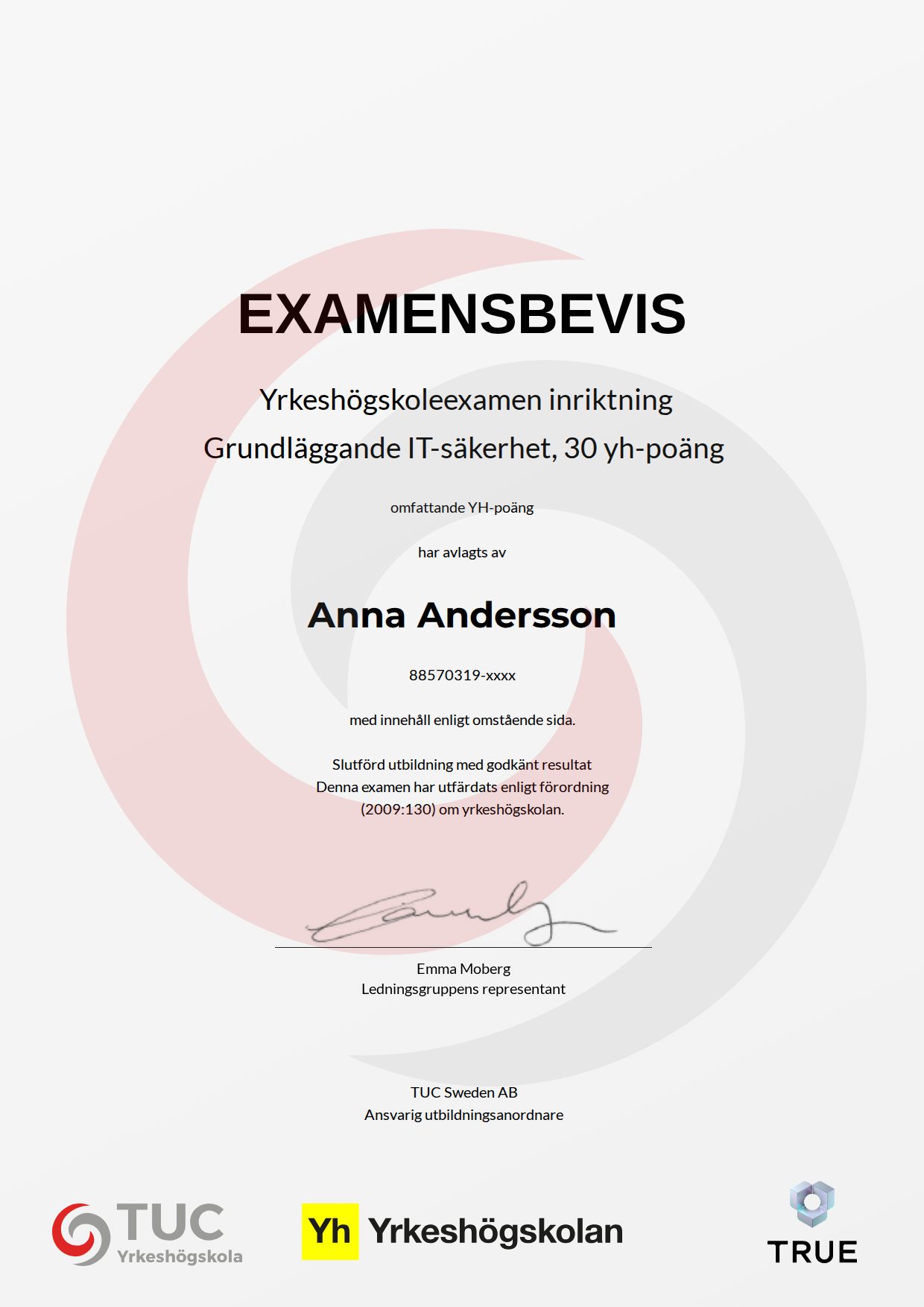
When you complete the course, TUC Yrkeshögskola issues your certificate. Your name, the course content and the issue date are encrypted and secured on blockchain, so it cannot be changed, and anyone can check that it is genuine.
100% Verifiable certificates Secured on blockchain