Part of a YH programme at TUC Yrkeshögskola. This course cannot be applied for on its own. Programme code: SYNE19JÖN.
The course Web Applications and Mobile Development gives you in-depth knowledge of dynamic websites and backend programming. You learn to create dynamic web applications with backend scripting languages and to understand the concepts of the responsive web and Mobile first. The course also highlights the differences between web-based solutions and apps. The course is part of TUC's YH programme in web development.
Duration: 20 weeks
Language: Swedish
Level: Intermediate
CSN-eligible
Time commitment: 20 YH credits, about 4 weeks of full-time study
Purpose and goal of the course
The purpose of the course is to give the students in-depth knowledge in the areas of dynamic websites and backend programming. The purpose of the course is also to give the students theoretical and practical knowledge of how to create dynamic web applications using backend scripting languages. The goal of the course is also to give the students knowledge of the concepts of the responsive web and Mobile first and how these differ from apps and other mobile solutions.
What you will learn
What you learn.
You can create dynamic web applications using backend scripting languages.
You understand the principles behind dynamic websites and backend programming.
You can apply the responsive web and Mobile first in development work.
You can describe the differences between web solutions, apps and other mobile solutions.
Curriculum
How the course is built.
Dynamic websites
Basics of backend programming for dynamic web applications.
Backend scripting languages
Practical work with scripting languages to build web applications.
Responsive web and Mobile first
Principles of mobile-adapted and responsive design.
Apps vs. web solutions
Comparison between apps and other mobile solutions.
Target audience
Who is this for?
The course is aimed at you who are studying a YH programme in web development and want to go deeper into backend programming and mobile adaptation.
What "verified" means here
Verified credential.
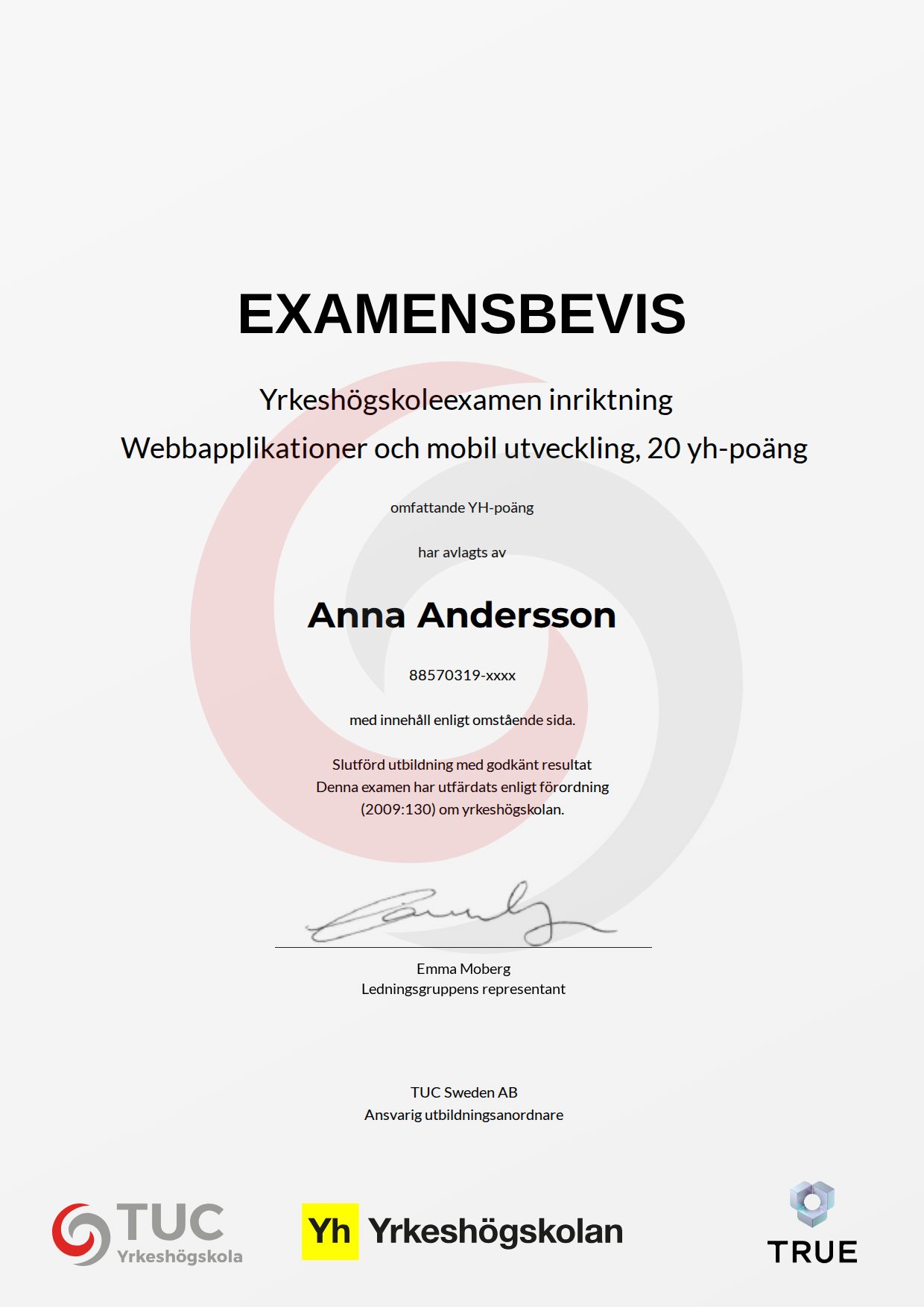
When you complete the course, TUC Yrkeshögskola issues your certificate. Your name, the course content and the issue date are encrypted and secured on blockchain, so it cannot be changed, and anyone can check that it is genuine.
100% Verifiable certificates Secured on blockchain