Part of the YH programme IT-säkerhetstekniker at TUC Yrkeshögskola. This course cannot be applied for on its own. Programme code: ITSÄK23LIN.
Security Basics gives you basic knowledge of the threats and risks that exist in IT, and of how to prevent and deal with a hacked website. You learn which rules and systems a company needs to protect itself against digital attacks and how to inform staff about minimising risks. The course also covers techniques for unauthorised intrusion, such as XSS, SQL injections, social engineering and brute force. After the course you can design a user policy and show the savings made when everyone follows shared routines and rules.
Duration: 4 weeks
Language: Swedish
Level: Beginner
CSN-eligible
Time commitment: Equivalent to about 4 weeks of full-time study (20 YH credits)
The goal of the course is to give students knowledge of potential threats and the risks that exist in IT, and of how to prevent and deal with a hacked site. The course gives students knowledge of which rules and systems are needed to protect the company against attacks in a digital environment and how to inform staff across the whole company about how to minimise risks. The course also gives students knowledge of basic techniques for unauthorised access to the system and how to handle them, such as XSS, SQL injections, social engineering and brute force.
After completing the course, the student should be able to write a user policy and show the savings that can be made when routines and rules are followed by everyone.
The goal of the course is to give students knowledge of potential threats and the risks that exist in IT, and of how to prevent and deal with a hacked site. The course gives students knowledge of which rules and systems are needed to protect the company against attacks in a digital environment and how to inform staff across the whole company about how to minimise risks. The course also gives students knowledge of basic techniques for unauthorised access to the system and how to handle them, such as XSS, SQL injections, social engineering and brute force.
After completing the course, the student should be able to write a user policy and show the savings that can be made when routines and rules are followed by everyone.
What you will learn
What you learn.
You can describe common threats and risks in IT security.
You know how to prevent and deal with a hacked website.
You know the rules and systems that protect a company against digital attacks.
You can explain basic attack techniques such as XSS, SQL injections, social engineering and brute force.
You can design a user policy for an organisation.
You can show the savings that arise when security routines are followed by everyone in the organisation.
Curriculum
How the course is built.
Threats and risks in IT
Review of common threats to companies' digital environments.
Dealing with a hacked website
Methods for preventing and remedying intrusions on a website.
Rules and protection systems
Which rules and systems are needed to protect the company against digital attacks.
Common attack techniques
XSS, SQL injections, social engineering and brute force: how they work and how to protect yourself.
User policy and risk minimisation
Designing a user policy and showing the savings from good security practice.
Target audience
Who is this for?
The course suits you if you are taking an IT-focused YH program at TUC and want a foundation in IT security.
What "verified" means here
Verified credential.
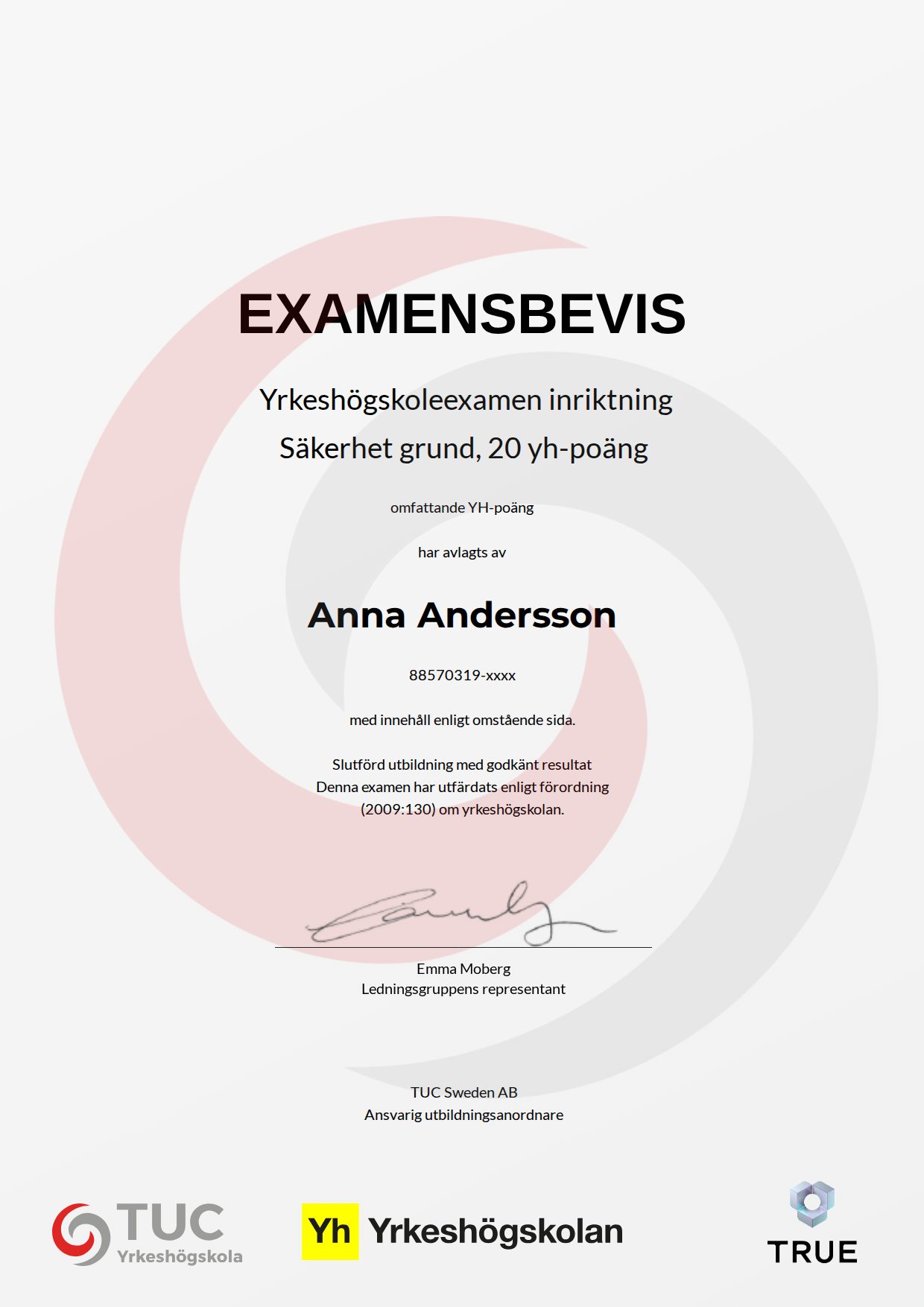
When you complete the course, TUC Yrkeshögskola issues your certificate. Your name, the course content and the issue date are encrypted and secured on blockchain, so it cannot be changed, and anyone can check that it is genuine.
100% Verifiable certificates Secured on blockchain