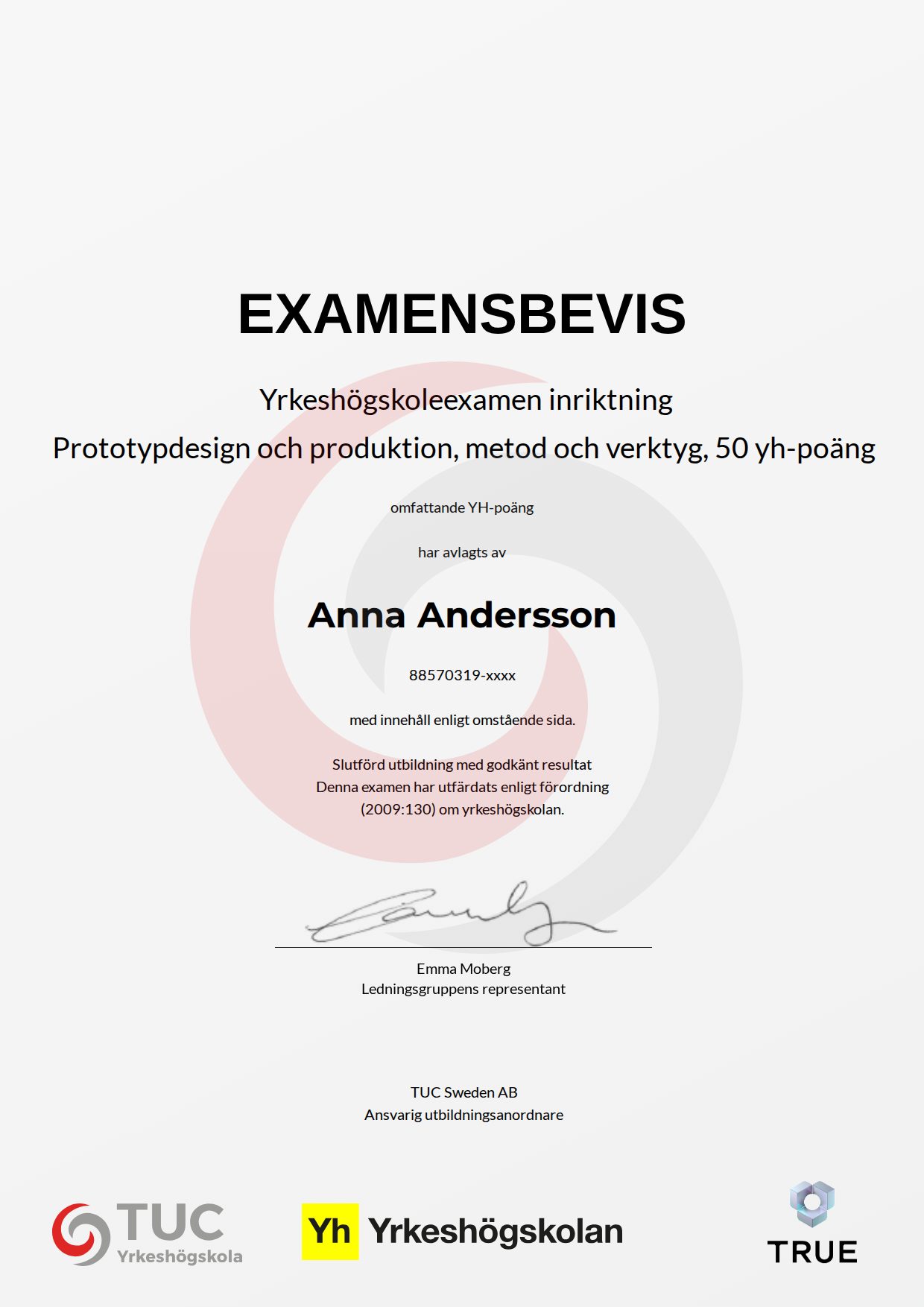
Part of the YH programme UX Designer 2024 at TUC Yrkeshögskola. This course cannot be applied for on its own. Programme code: UXDD24LIN.
The course Prototype Design and Production, Method and Tools gives you, in the role of UX designer, knowledge of commonly used programming languages, storage structures, control structures and algorithms. You learn the basics of programming and working methods for testing, debugging and correcting code, which is central when you build and test prototypes. The course also gives you enough knowledge to understand technical instructions and manuals in English, with practical exercises throughout.
Duration: 10 weeks
Language: Swedish
Level: Advanced
CSN-eligible
Time commitment: Equivalent to about 10 weeks of full-time study
In this course the student learns about commonly used programming languages, storage structures, control structures and algorithms that are relevant in the role of UX designer. The course covers the basics of programming and working methods for testing, debugging and correcting code. The course should give sufficient knowledge to understand technical instructions and read manuals in English. The course includes practical exercises.
In this course the student learns about commonly used programming languages, storage structures, control structures and algorithms that are relevant in the role of UX designer. The course covers the basics of programming and working methods for testing, debugging and correcting code. The course should give sufficient knowledge to understand technical instructions and read manuals in English. The course includes practical exercises.
What you will learn
What you learn.
You know commonly used programming languages and when they are used
You understand basic storage structures and control structures
You understand basic algorithms
You can test, debug and correct code
You can understand technical instructions and manuals in English
You can apply method and tools in prototype design and production
Curriculum
How the course is built.
Programming languages and basics
Review of commonly used programming languages.
Storage and control structures
Basic concepts for how data and logic are handled in code.
Algorithms
Introduction to algorithmic thinking.
Testing and debugging
Working methods for testing, debugging and correcting code.
Technical English
Reading and understanding technical instructions and manuals in English.
Prototype design and tools
Method and tools for building and producing prototypes.
Target audience
Who is this for?
The course is part of the YH program for UX designers and suits you if you want to understand the basics of programming in order to build and test prototypes.
What "verified" means here
Verified credential.
When you complete the course, TUC Yrkeshögskola issues your certificate. Your name, the course content and the issue date are encrypted and secured on blockchain, so it cannot be changed, and anyone can check that it is genuine.
100% Verifiable certificates Secured on blockchain