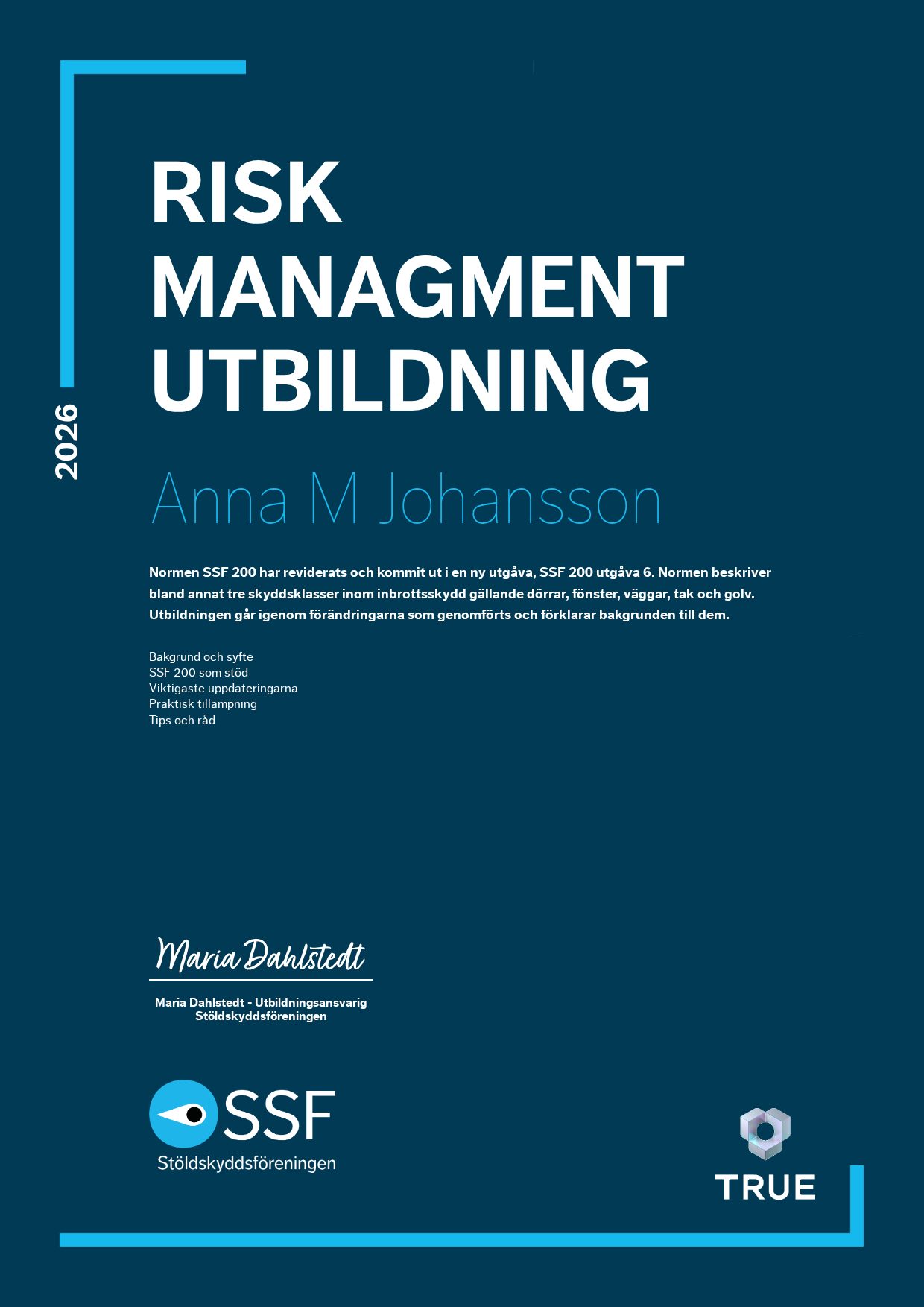
The SSF 200 standard has been revised and released in a new edition, SSF 200 edition 6. Among other things, the standard describes three protection classes for burglary protection covering doors, windows, walls, roofs and floors. The training goes through the changes that have been made and explains the background to them.
Duration: 4 h
Format: On site
Language: Swedish
Level: Intermediate
Time commitment: 1/2 day
Request info
Want to know more before you sign up?
Send a short question and we will forward it directly to the provider.
We forward your question to SSF - Svenska Stöldskyddsföreningen. No spam, no third parties.
About the course.
The SSF 200 standard has been revised and released in a new edition, SSF 200, edition 6. The standard is comprehensive and describes, among other things, three different protection classes for burglary protection covering, for example, doors, windows, walls, roofs and floors. During this training we have gone through the changes that have been made, and we also explain the background to the changes. This is very valuable knowledge whether you set requirements for, use, procure or supply security.
1/2 day
- Brief review of the background, purpose and areas of use of SSF 200.
- Explained how SSF 200 is a good and often decisive support in burglary protection work, from a security, quality and economic perspective.
- Gone through the most important updates and changes in the latest version of SSF 200.
- Explained and illustrated with examples what the changes mean in practice when working according to SSF 200.
- Summarized and given concrete tips and advice to those of you who are either starting or continuing to work according to SSF 200.
What you will learn
What you learn.
You know the background, purpose and areas of use of SSF 200.
You understand the role of SSF 200 from a security, quality and economic perspective.
You can explain the most important updates in edition 6.
You can give examples of what the changes mean in practice.
You get concrete tips and advice for continued work according to SSF 200.
Curriculum
How the course is built.
Background and purpose
Brief review of the background, purpose and areas of use of SSF 200.
SSF 200 as support
How the standard serves as support in burglary protection work.
Most important updates
Review of the most important changes in the latest version.
Practical application
Examples of what the changes mean in practice.
Tips and advice
Summary with concrete advice for continued work according to SSF 200.
Target audience
Who is this for?
Those who set requirements for, use, procure or supply security and work with burglary protection for buildings and premises.
What "verified" means here
Verified credential.
When you complete the course, SSF - Svenska Stöldskyddsföreningen issues your certificate. Your name, the course content and the issue date are encrypted and secured on blockchain, so it cannot be changed, and anyone can check that it is genuine.
Dozens of credentials issued 100% Verifiable certificates Secured on blockchain