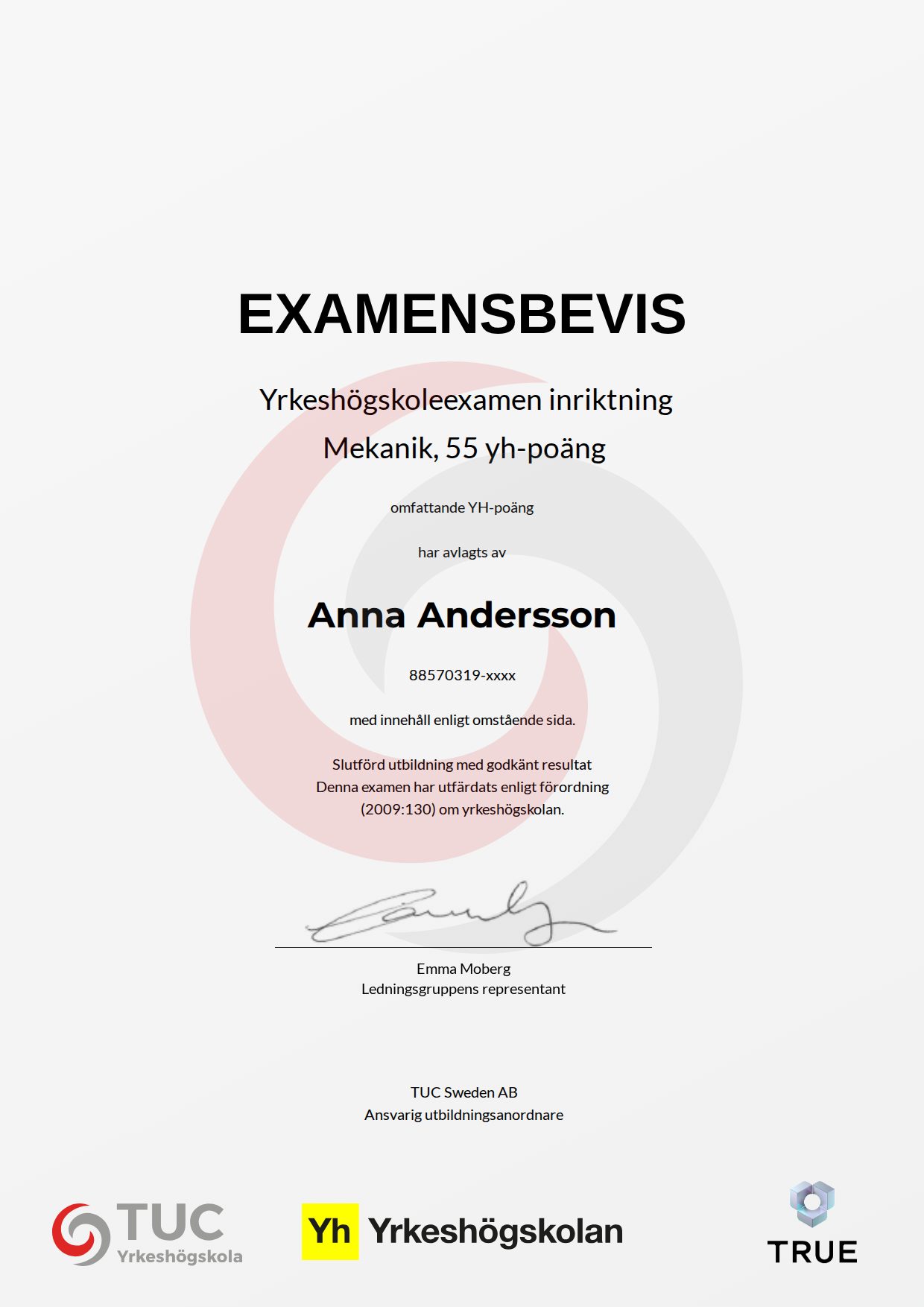
In the course, students learn the basics of mechanical maintenance and develop knowledge of
pneumatic and hydraulic systems. Through theory and practical exercises, both individually and in
small groups, students gain knowledge of how the systems are built, how they work,
troubleshooting and maintenance. The course covers machine theory, machine elements, drawing reading, materials science,
tribology and machine safety. Students also develop practical skills in turning, milling, drilling, grinding, threading, welding and assembly techniques. The course also includes vibration technology, documentation and system solutions such as pressure control, position control and vacuum technology. After completing the course, students should be able to carry out troubleshooting and maintenance of both simpler and more advanced machines, and be prepared for their future professional role as maintenance technicians.
In the course, students learn the basics of mechanical maintenance and develop knowledge of
pneumatic and hydraulic systems. Through theory and practical exercises, both individually and in
small groups, students gain knowledge of how the systems are built, how they work,
troubleshooting and maintenance. The course covers machine theory, machine elements, drawing reading, materials science,
tribology and machine safety. Students also develop practical skills in turning, milling, drilling, grinding, threading, welding and assembly techniques. The course also includes vibration technology, documentation and system solutions such as pressure control, position control and vacuum technology. After completing the course, students should be able to carry out troubleshooting and maintenance of both simpler and more advanced machines, and be prepared for their future professional role as maintenance technicians.