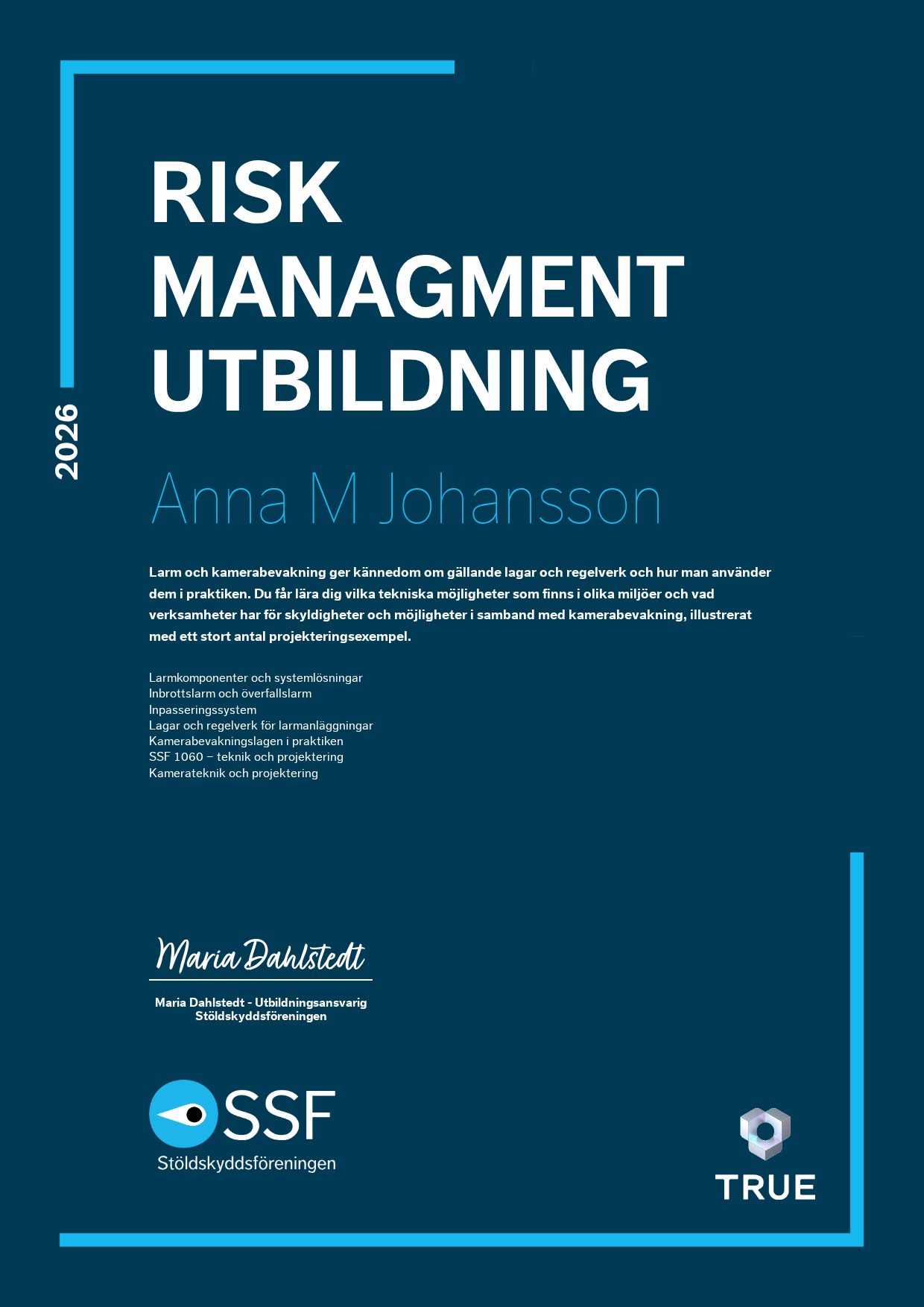
Alarm and camera surveillance gives knowledge of the applicable laws and regulations and how to use them in practice. You learn which technical options exist in different environments and what obligations and possibilities organisations have in connection with camera surveillance, illustrated with a large number of design examples.
Duration: 3 days
Format: On site
Location: Stockholm
Language: Swedish
Level: Intermediate
Time commitment: 3 days
Request info
Want to know more before you sign up?
Send a short question and we will forward it directly to the provider.
We forward your question to SSF - Svenska Stöldskyddsföreningen. No spam, no third parties.
About the course.
During the Alarm and Camera Surveillance course, participants learn the content of the applicable laws and regulations and how to use them. The course covers the technical options available in different environments, and the obligations and possibilities organisations have in connection with camera surveillance.
3 days
Alarm components, functions, structure and system solutions. This is illustrated with a large number of design examples and practised in a design assignment.
- Intruder alarms
- Hold-up alarms
- Access control systems
- Laws and regulations for alarm installations
- The Camera Surveillance Act (Kamerabevakningslagen), practical applications and interpretations.
- The SSF 1060 standard, technology and design.
- Technology: camera, lens, monitor, central equipment and storage media.
- Design: areas of use, camera placement, lighting, integration and checklists.
What you will learn
What you learn.
You can describe alarm components, functions, structure and system solutions.
You know the laws and regulations for alarm installations, including intruder alarms and hold-up alarms.
You understand access control systems and how they work together with alarms.
You can apply the Camera Surveillance Act in practice when designing systems.
You know the SSF 1060 standard for the technology and design of camera surveillance.
You can reason about camera placement, lighting, integration and checklists when designing systems.
Curriculum
How the course is built.
Alarm components and system solutions
Structure and function, with design examples and an exercise.
Intruder alarms and hold-up alarms
Differences and functions between the alarm types.
Access control systems
How access control systems work together with alarms and camera surveillance.
Laws and regulations for alarm installations
Relevant legislation for alarm installations.
The Camera Surveillance Act in practice
Practical applications and interpretations of the act.
SSF 1060: technology and design
The standard for camera surveillance systems.
Camera technology and design
Camera, lens, monitor, central equipment, storage media, camera placement and lighting.
Target audience
Who is this for?
Users, procurers, installers, project managers and security consultants who work with alarm and camera surveillance systems.
What "verified" means here
Verified credential.
When you complete the course, SSF - Svenska Stöldskyddsföreningen issues your certificate. Your name, the course content and the issue date are encrypted and secured on blockchain, so it cannot be changed, and anyone can check that it is genuine.
Dozens of credentials issued 100% Verifiable certificates Secured on blockchain