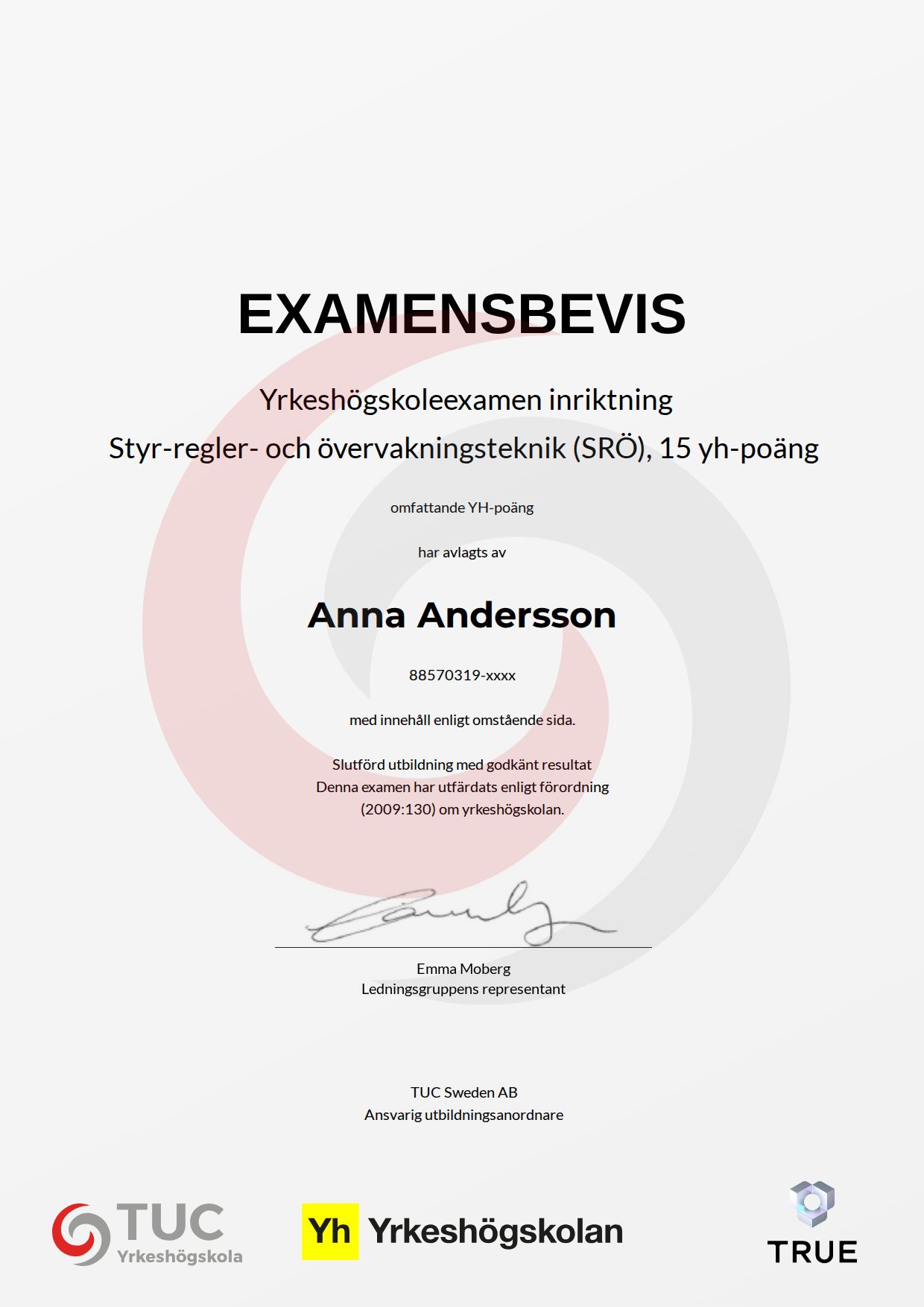
Part of a YH programme at TUC Yrkeshögskola. This course cannot be applied for on its own. Programme code: VVS19JÖN.
Control, Regulation and Monitoring Technology (SRÖ) gives you knowledge of how a SCADA system is structured, how it works and how to operate it at user level. You get tools to read and interpret values in flow diagrams and operating charts, for example for air handling units and heating substations. The course is given within TUC Yrkeshögskola's YH programme for property operations technicians and provides knowledge of standardised data buses in building automation. After the course you understand the difference between field level, DUC level and DHC/SCADA level.
Duration: 3 weeks
Language: Swedish
Level: Intermediate
CSN-eligible
Time commitment: 15 YH credits, approx. 3 weeks of full-time study
The purpose of the course is to provide knowledge of how a SCADA system (Supervisory Control And Data Acquisition) is structured and how it works, and the ability to operate a SCADA system at user level. The course gives students the tools to read and interpret values from a flow diagram in an operating chart or an operating screen in SCADA. Furthermore, students should be able to interpret and understand different kinds of operating charts, e.g. from an air handling unit and a heating substation. Using dynamic flow diagrams, students should be able to determine how an installation works. The course provides knowledge of standardised data buses used in building automation and the ability to understand the difference between field level, DUC level and DHC/SCADA level.
The purpose of the course is to provide knowledge of how a SCADA system (Supervisory Control And Data Acquisition) is structured and how it works, and the ability to operate a SCADA system at user level. The course gives students the tools to read and interpret values from a flow diagram in an operating chart or an operating screen in SCADA. Furthermore, students should be able to interpret and understand different kinds of operating charts, e.g. from an air handling unit and a heating substation. Using dynamic flow diagrams, students should be able to determine how an installation works. The course provides knowledge of standardised data buses used in building automation and the ability to understand the difference between field level, DUC level and DHC/SCADA level.
What you will learn
What you learn.
You can describe how a SCADA system is structured and works
You can operate a SCADA system at user level
You can read and interpret values in flow diagrams and operating charts
You can interpret operating charts for, for example, air handling units and heating substations
You know the standardised data buses in building automation
You understand the difference between field level, DUC level and DHC/SCADA level
Curriculum
How the course is built.
Structure of the SCADA system
The basics of how a SCADA system is structured and works.
User level in SCADA
Practical handling of a SCADA system at user level.
Flow diagrams and operating charts
Reading and interpreting operating charts for, for example, ventilation and heating substations.
Building automation and data buses
Standardised data buses and levels in building automation, from field level to DHC/SCADA level.
Target audience
Who is this for?
The course is aimed at you if you are studying the YH programme Property Operations Technician at TUC and will work with control, regulation and monitoring systems in buildings.
What "verified" means here
Verified credential.
When you complete the course, TUC Yrkeshögskola issues your certificate. Your name, the course content and the issue date are encrypted and secured on blockchain, so it cannot be changed, and anyone can check that it is genuine.
100% Verifiable certificates Secured on blockchain