Part of a YH programme at TUC Yrkeshögskola. This course cannot be applied for on its own. Programme code: STI19STO.
The course introduces concepts, methods and tools for Supplier Relationship Management (SRM), that is, how a company drives its supplier development. You gain knowledge of approaches, methods and management of the supplier base to get full value from the supply chain. The course also gives sound knowledge of assessing and qualifying suppliers and of how segmentation and key performance indicators are used to follow up performance. The goal is for you to be able to create and further develop different types of collaboration with suppliers.
Duration: 3 weeks
Language: Swedish
Level: Advanced
CSN-eligible
Time commitment: Equivalent to approx. 3 weeks of full-time study
The purpose of the course is to introduce concepts, methods and tools for driving a company's supplier development, or Supplier Relationship Management (SRM).
The goal of the course is for the student to have knowledge of approaches, methods and management of a company's supplier base so that full value is obtained from the supply chain.
The purpose and learning goals also include giving sound knowledge of what is important when assessing and qualifying suppliers, as well as information about working methods to use during the process.
The course should give students knowledge of how existing supplier relationships are segmented by priority and how key performance indicators can be established in different ways so that supplier performance can be followed up. In addition, the course aims to describe how the student can create and further develop different types of collaboration with suppliers.
The purpose of the course is to introduce concepts, methods and tools for driving a company's supplier development, or Supplier Relationship Management (SRM).
The goal of the course is for the student to have knowledge of approaches, methods and management of a company's supplier base so that full value is obtained from the supply chain.
The purpose and learning goals also include giving sound knowledge of what is important when assessing and qualifying suppliers, as well as information about working methods to use during the process.
The course should give students knowledge of how existing supplier relationships are segmented by priority and how key performance indicators can be established in different ways so that supplier performance can be followed up. In addition, the course aims to describe how the student can create and further develop different types of collaboration with suppliers.
What you will learn
What you learn.
You know the key concepts and methods of Supplier Relationship Management
You can assess and qualify suppliers
You can segment suppliers by priority and importance
You can establish key performance indicators to follow up supplier performance
You can create and further develop collaborations with suppliers
Curriculum
How the course is built.
Introduction to SRM
Basic concepts and approaches in Supplier Relationship Management.
Assessment and qualification
Methods for assessing and qualifying suppliers.
Supplier segmentation
How suppliers are segmented by priority and importance.
KPIs and follow-up
Establishing and following up key performance indicators for supplier performance.
Supplier collaboration
Creating and further developing different types of collaboration with suppliers.
Target audience
Who is this for?
Students on TUC's YH programmes focused on purchasing and Supply Chain Management.
What "verified" means here
Verified credential.
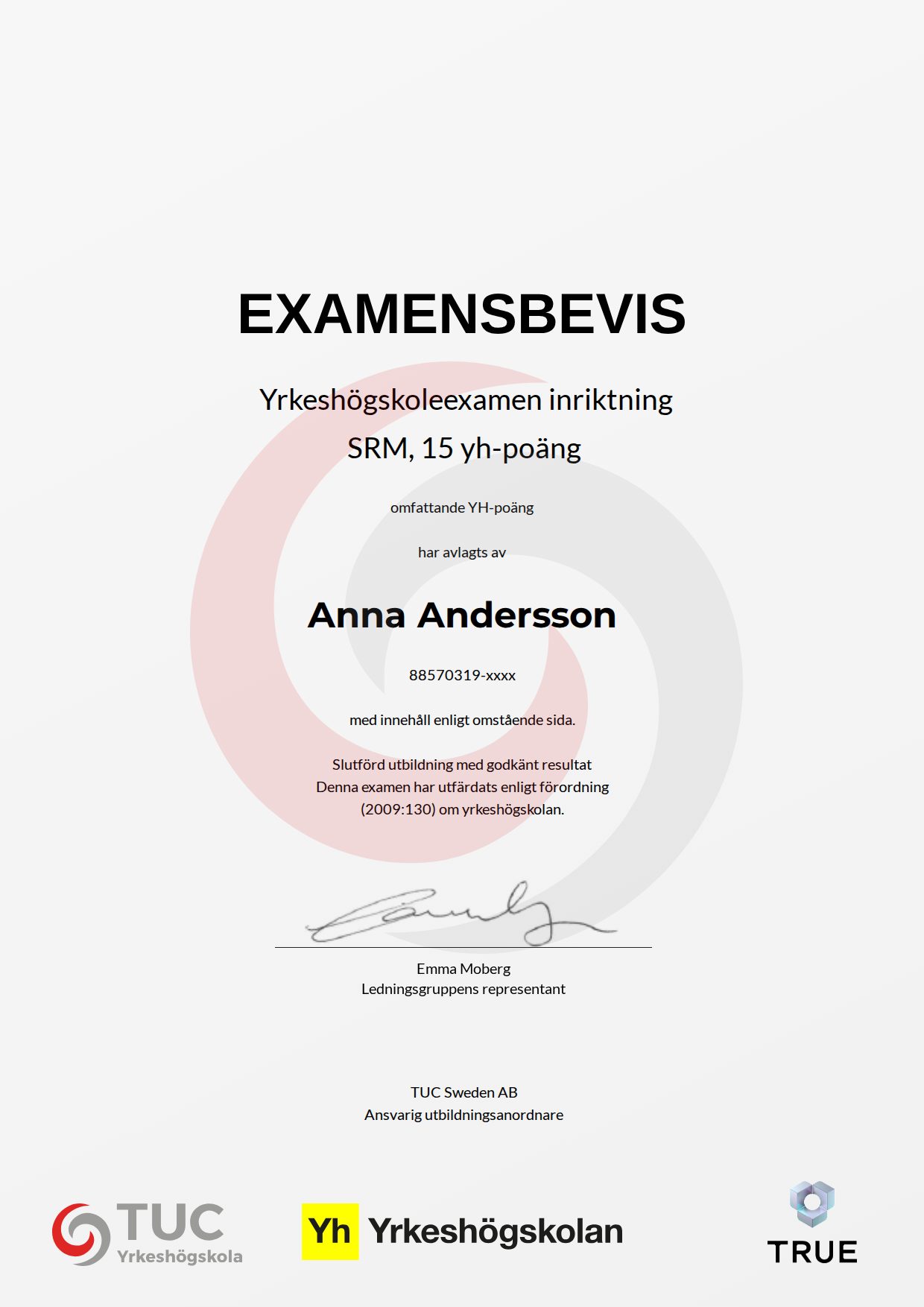
When you complete the course, TUC Yrkeshögskola issues your certificate. Your name, the course content and the issue date are encrypted and secured on blockchain, so it cannot be changed, and anyone can check that it is genuine.
100% Verifiable certificates Secured on blockchain