Part of the YH programme Elkonstruktör at TUC Yrkeshögskola. This course cannot be applied for on its own. Programme code: ELKO23LIN.
Environment, Quality and Sustainable Production Development, 20 YH credits, gives you knowledge of sustainable development and global, regional and local environmental problems, as well as environmental and quality assurance according to ISO 9000 and ISO 14000. Through theory and practical exercises, you develop the ability to evaluate a product's environmental impact and quality, and to understand how the designer's choice of material, manufacturing method and design affects the environment and quality from a life cycle perspective.
Duration: 4 weeks
Language: Swedish
Level: Intermediate
CSN-eligible
Time commitment: Full-time study corresponding to 20 YH credits (approx. 4 weeks)
The purpose is to provide knowledge of the structure of the electricity supply system from an environmental and energy perspective. The objective is that the student shall have knowledge of how sustainable electricity is generated and which energy sources are used, as well as the electricity and energy sources of the future. The student shall have knowledge of the environmental consequences linked to electricity consumption and of how to evaluate construction and design choices from an environmental and energy point of view. The student shall have skills in energy calculations and efficiency analyses. The objective of the course is to provide knowledge of the industry's applicable quality and environmental management systems as well as control systems.
The purpose is to provide knowledge of the structure of the electricity supply system from an environmental and energy perspective. The objective is that the student shall have knowledge of how sustainable electricity is generated and which energy sources are used, as well as the electricity and energy sources of the future. The student shall have knowledge of the environmental consequences linked to electricity consumption and of how to evaluate construction and design choices from an environmental and energy point of view. The student shall have skills in energy calculations and efficiency analyses. The objective of the course is to provide knowledge of the industry's applicable quality and environmental management systems as well as control systems.
What you will learn
What you learn.
You have knowledge of sustainable development and global/regional/local environmental problems.
You know the environmental and quality standards ISO 9000 and ISO 14000.
You can evaluate and describe a product's environmental impact and quality.
You understand how choice of material, manufacturing method and design affect the environment and quality from a life cycle perspective.
You can interpret the results of an environmental impact analysis.
Curriculum
How the course is built.
Sustainable development and environmental problems
Global, regional and local environmental issues and the concept of sustainability.
ISO 9000 and ISO 14000
Environmental and quality management systems for products and companies.
Life cycle perspective
How choice of material, manufacturing method and design affect the environment and quality.
Environmental impact analysis
Interpreting and reporting results from environmental impact and quality analyses.
Target audience
Who is this for?
The course suits future designers and product developers in engineering and manufacturing.
What "verified" means here
Verified credential.
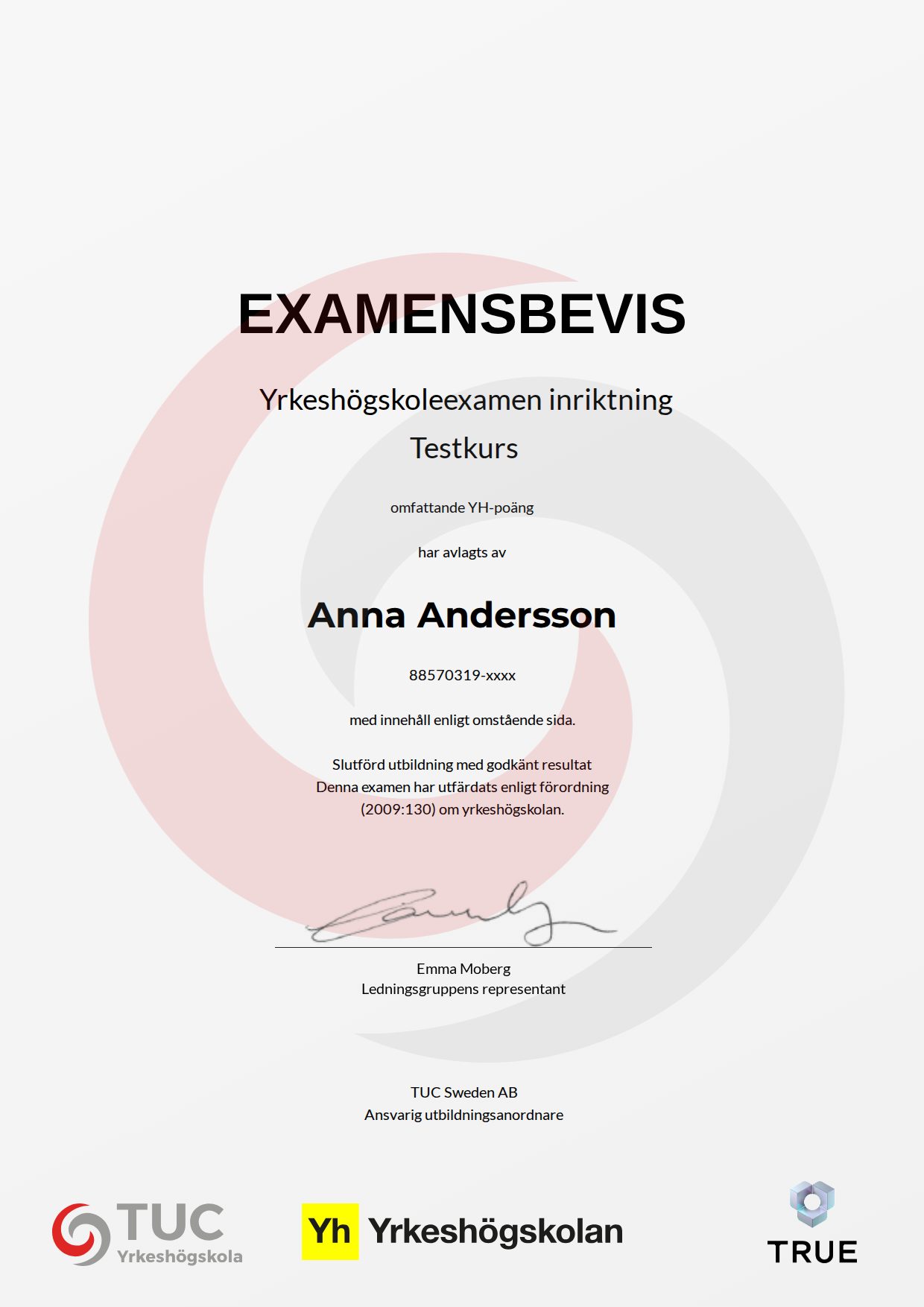
When you complete the course, TUC Yrkeshögskola issues your certificate. Your name, the course content and the issue date are encrypted and secured on blockchain, so it cannot be changed, and anyone can check that it is genuine.
100% Verifiable certificates Secured on blockchain