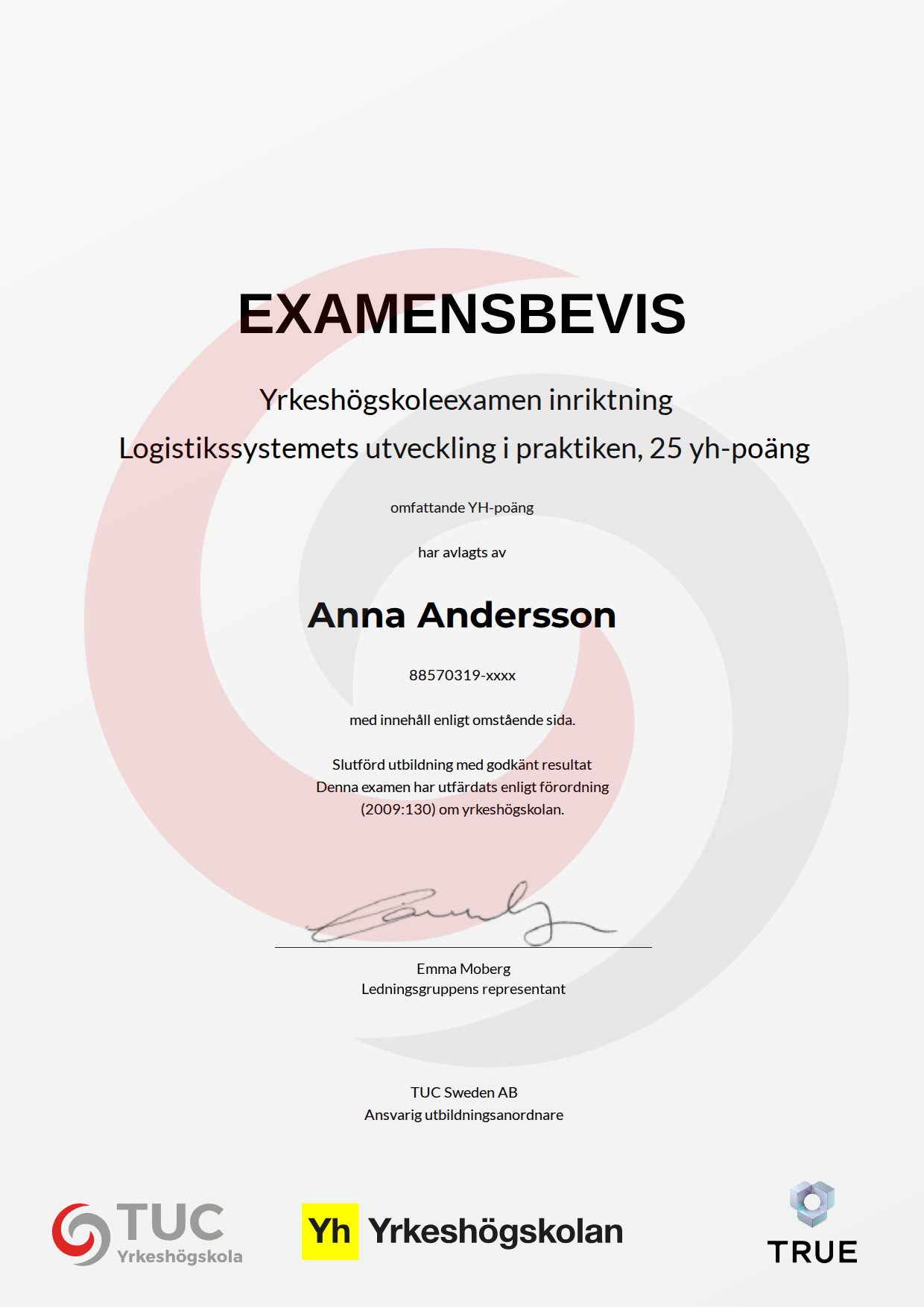
Part of the YH programme Logistiker at TUC Yrkeshögskola. This course cannot be applied for on its own. Programme code: LOG23STO.
The course highlights issues linked to strategic logistics and a holistic view of logistics systems. You learn practical models and techniques that can be applied when building and developing logistics systems, with a focus on integration and collaboration for improved efficiency in supply chains. After the course, you can describe the factors that affect systematic development work within the logistics function and apply techniques for practical development work in both goods-producing and service-producing companies.
Duration: 5 weeks
Language: Swedish
Level: Advanced
CSN-eligible
Time commitment: Full-time, 5 weeks (25 YH credits)
The purpose of the course is to highlight issues related to strategic logistics and a holistic view of logistics systems. During the course, a number of practical models and techniques are introduced that can be applied when building and developing logistics systems.
The goal of the course is to give in-depth knowledge of integration and collaboration for improved efficiency in supply chains. After completing the course, the student will be able to describe the factors that affect systematic development work within the logistics function. The student will learn a selection of techniques suited to carrying out practical development work in both goods-producing and service-producing companies.
The purpose of the course is to highlight issues related to strategic logistics and a holistic view of logistics systems. During the course, a number of practical models and techniques are introduced that can be applied when building and developing logistics systems.
The goal of the course is to give in-depth knowledge of integration and collaboration for improved efficiency in supply chains. After completing the course, the student will be able to describe the factors that affect systematic development work within the logistics function. The student will learn a selection of techniques suited to carrying out practical development work in both goods-producing and service-producing companies.
What you will learn
What you learn.
You can describe strategic logistics and a holistic view of logistics systems.
You know practical models and techniques for building and developing logistics systems.
You have in-depth knowledge of integration and collaboration for more efficient supply chains.
You can identify factors that affect systematic development work within the logistics function.
You can apply development techniques in both goods-producing and service-producing companies.
Curriculum
How the course is built.
Strategic logistics and a holistic view
Introduction to strategic perspectives on logistics systems.
Models and techniques for system development
Practical tools for building and developing logistics systems.
Integration and collaboration
In-depth look at how integration between actors improves efficiency in the supply chain.
Practical development work
Applying techniques for development work in goods-producing and service-producing companies.
Target audience
Who is this for?
The course is aimed at you who are studying TUC's YH programme in logistics or supply chain management and want to specialise in the strategic development of logistics systems.
What "verified" means here
Verified credential.
When you complete the course, TUC Yrkeshögskola issues your certificate. Your name, the course content and the issue date are encrypted and secured on blockchain, so it cannot be changed, and anyone can check that it is genuine.
100% Verifiable certificates Secured on blockchain