Part of the YH programme Logistiker at TUC Yrkeshögskola. This course cannot be applied for on its own. Programme code: LOG23STO.
The course gives you an in-depth understanding of how production systems and value chains develop using methods and tools from the Lean philosophy. You learn the basics of flow thinking, production philosophy, tied-up capital, customer order control and coordination of goods and information flows. The course is part of TUC's higher vocational education programmes focused on production and logistics and connects Lean tools with Supply Chain Management. After the course, you can assess and calculate options to optimise the whole logistics value chain.
Duration: 8 weeks
Language: Swedish
Level: Intermediate
CSN-eligible
Time commitment: Equivalent to about 8 weeks of full-time study
The aim of the course is to create an understanding of how the production system and the value chain develop using methods and tools related to the Lean philosophy. The course also gives an introduction to flow thinking in the company, focusing on how the production system is structured, production philosophy, aspects of tied-up capital, customer order control and coordination of goods and information flows.
The goal of the course is for students to be well versed in the philosophy behind "lean" processes, and to know and be able to apply a number of Lean tools. Students will understand, assess and calculate options with the aim of optimising the whole and gaining business benefits in the logistics value chain.
The aim of the course is to create an understanding of how the production system and the value chain develop using methods and tools related to the Lean philosophy. The course also gives an introduction to flow thinking in the company, focusing on how the production system is structured, production philosophy, aspects of tied-up capital, customer order control and coordination of goods and information flows.
The goal of the course is for students to be well versed in the philosophy behind "lean" processes, and to know and be able to apply a number of Lean tools. Students will understand, assess and calculate options with the aim of optimising the whole and gaining business benefits in the logistics value chain.
What you will learn
What you learn.
You understand the basic structure of the production system and the value chain
You can apply key tools and methods of the Lean philosophy
You can assess and calculate options to optimise production flows
You understand how tied-up capital affects the company's financial results
You can analyse customer order control and coordination of goods and information flows
You gain basic knowledge of Supply Chain Management
Curriculum
How the course is built.
Development of the production system
History and drivers behind how production systems and value chains change over time.
The Lean philosophy and its tools
Key Lean tools and how they are used to create resource-efficient processes.
Flow thinking and production philosophy
A flow-oriented way of working linked to how production is structured.
Tied-up capital and finance
How inventory and tied-up capital affect the company's financial results.
Customer order control and Supply Chain Management
Coordination of goods and information flows throughout the value chain.
Target audience
Who is this for?
Students on TUC's higher vocational education programmes focused on production, logistics and purchasing who want to go deeper into Lean and Supply Chain Management.
What "verified" means here
Verified credential.
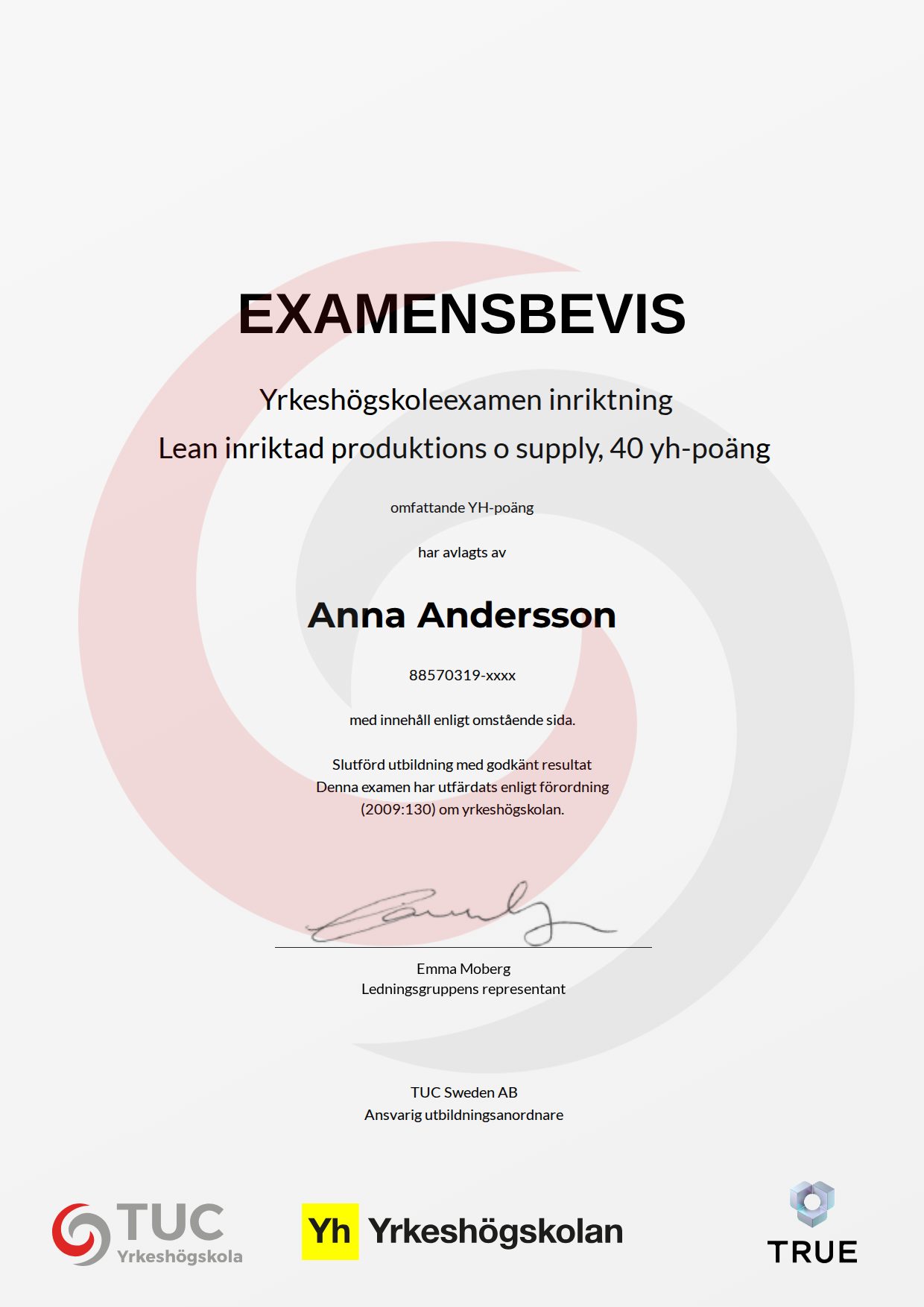
When you complete the course, TUC Yrkeshögskola issues your certificate. Your name, the course content and the issue date are encrypted and secured on blockchain, so it cannot be changed, and anyone can check that it is genuine.
100% Verifiable certificates Secured on blockchain