A harsher media climate with a pack mentality, and customers who demand more transparency and proper conduct, mean that the trust capital and reputation of companies, authorities and organisations have never been as fragile as now. This full-day course aims to give you tools and concrete tips for effectively handling crises of trust and media scrutiny. You will learn to avoid the most common mistakes and how you should act, step by step, when the crisis comes.
Format: Hybrid
Language: Swedish
Request info
Want to know more before you sign up?
Send a short question and we will forward it directly to the provider.
We forward your question to Bonnier Akademi. No spam, no third parties.
About the course.
A harsher media climate with a pack mentality, and customers who demand more transparency and proper conduct, mean that the trust capital and reputation of companies, authorities and organisations have never been as fragile as now. This full-day course aims to give you tools and concrete tips for effectively handling crises of trust and media scrutiny. You will learn to avoid the most common mistakes and how you should act, step by step, when the crisis comes.
People in power, managers and public figures find that the media climate is increasingly marked by a focus on individuals, sensational headlines, pack mentality and the hunt for entertainment value. Single statements or mistakes can have major consequences.
At the same time, companies and organisations often make mistakes in crisis management. Among the most common is the human defence mechanism that arises when you are scrutinised in detail or a problem comes to light: you react defensively and avoid giving straight and clear answers. Instead of analysing the criticism and working in a structured way, people in an organisation tend to run in different directions. This feeds the media drama and contributes to escalation and more articles.
This course aims to give you insights, tools and tips for handling a crisis correctly and effectively and avoiding the most common mistakes.
What you will learn
What you learn.
The knowledge needed to work in a structured and effective way when the crisis comes
Concrete tools and advice for successful media relations
Curriculum
How the course is built.
What to do when the crisis comes: step by step
The most common mistakes in crisis management and crisis communication and how to avoid them
Success factors for crisis management and media training
How media logic and the pack mentality work, and how to respond to media scrutiny and avoid crises of trust
How to take control of your own story and get your messages and arguments across
How the management team, the crisis management team or the crisis communication group can take a joint grip on crisis and media handling
Methods for working effectively under pressure
Preventive crisis work: the crisis plan, the composition of the crisis team and methods for effective work
Assessing your organisation's crisis awareness
Target audience
Who is this for?
You who work strategically or operationally with crisis management, crisis communication and media relations, or who hold a senior position that gives you a key function when the crisis comes.
What "verified" means here
Verified credential.
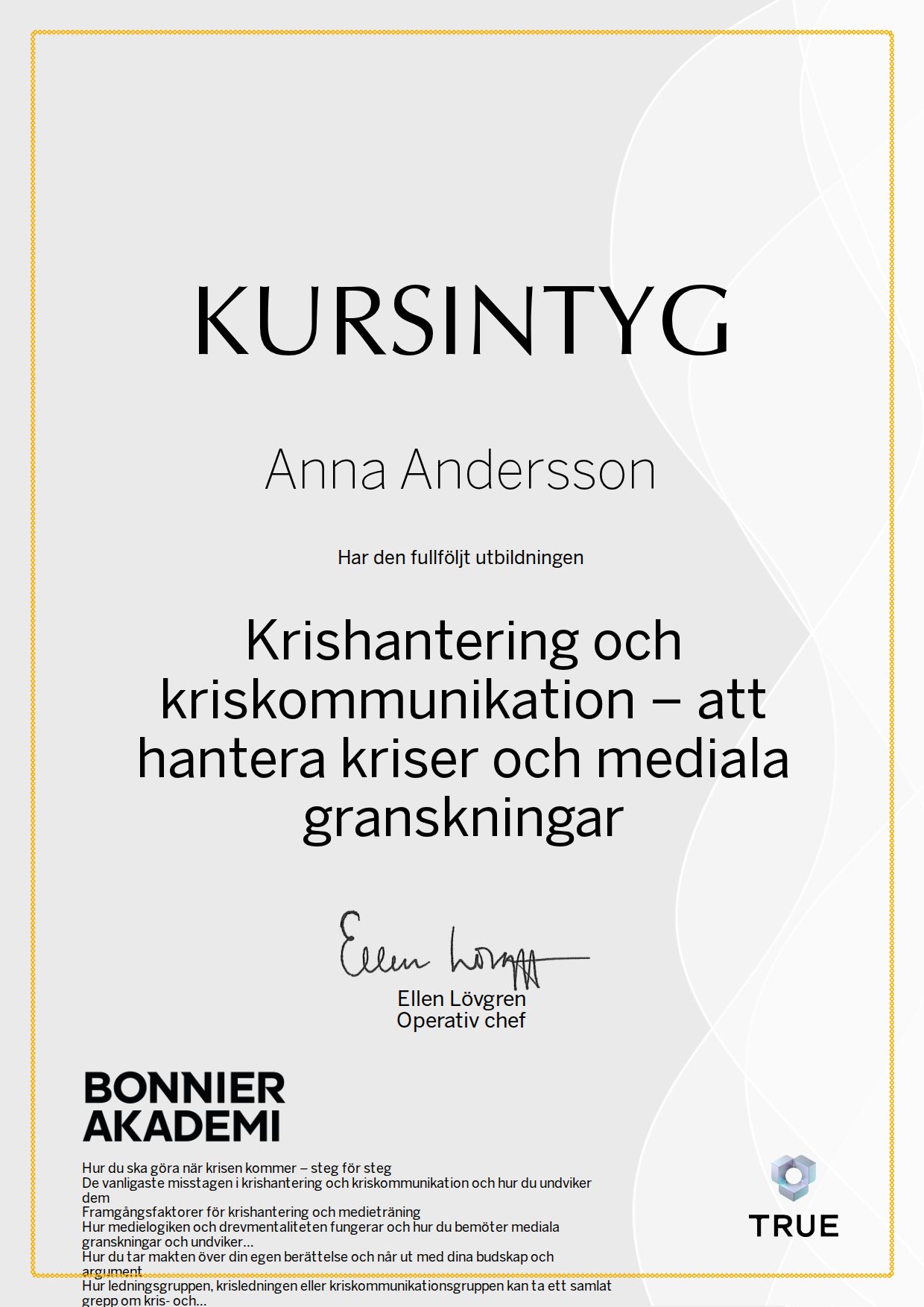
When you complete the course, Bonnier Akademi issues your certificate. Your name, the course content and the issue date are encrypted and secured on blockchain, so it cannot be changed, and anyone can check that it is genuine.
100% Verifiable certificates Secured on blockchain
 Bonnier Akademi under the brandsResumé AkademiDi AkademiDagens Samhälle Utbildning