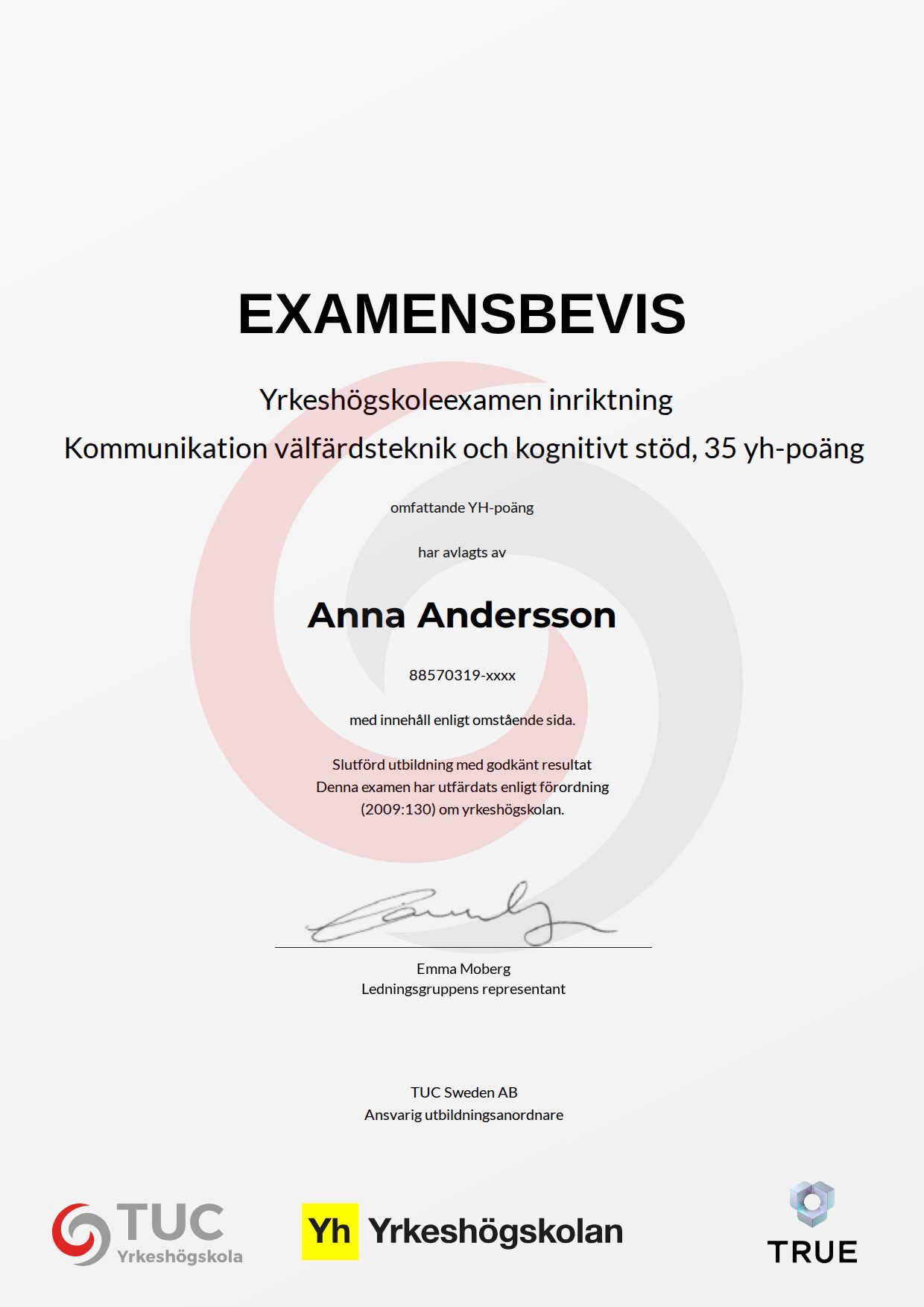
In the course, the student learns about communication and interaction in the disability field and how it is a prerequisite for participation, influence and self-determination. Furthermore, the student gains knowledge of augmentative and alternative communication, conversation methodology, digital communication and the importance of cognitive support. The course also highlights the opportunities, challenges and dilemmas of digitalization. The course will give sufficient know-how for the student, in their future professional role as a support educator, to take part in implementing welfare technology. After the course, the student will also be able to supervise others in the use of educational and communicative methods in order to promote the individual's participation and independence.
In the course, the student learns about communication and interaction in the disability field and how it is a prerequisite for participation, influence and self-determination. Furthermore, the student gains knowledge of augmentative and alternative communication, conversation methodology, digital communication and the importance of cognitive support. The course also highlights the opportunities, challenges and dilemmas of digitalization. The course will give sufficient know-how for the student, in their future professional role as a support educator, to take part in implementing welfare technology. After the course, the student will also be able to supervise others in the use of educational and communicative methods in order to promote the individual's participation and independence.