Part of a YH programme at TUC Yrkeshögskola. This course cannot be applied for on its own. Programme code: ENI19TRA.
Installation Systems gives you in-depth knowledge of energy systems in properties. You learn to interpret operating cards and flow diagrams and gain knowledge of sizing and balancing heating, cooling and ventilation installations. The course also gives you skills in measuring flows, processing measurement data and carrying out energy calculations in order to propose energy-efficient measures.
Duration: 25 weeks
Language: Swedish
Level: Intermediate
CSN-eligible
Time commitment: 25 YH credits, approx. 5 weeks of full-time study
The purpose of the course is to provide in-depth knowledge of heat distribution and different types of heating systems as well as other energy systems in a property. The course gives the students the technical and physical knowledge required for designing and sizing heating systems in buildings. The course gives the students in-depth knowledge and skills in system design, sizing and documentation of installations for heating, domestic hot water, water and drainage, and ventilation in buildings. The students shall also know the historical development of these systems and the standards that regulate their execution. The goal of the course is to develop an understanding of context and connections from a system perspective and to be able to evaluate the environmental and economic consequences of different energy systems.
The purpose of the course is to provide in-depth knowledge of heat distribution and different types of heating systems as well as other energy systems in a property. The course gives the students the technical and physical knowledge required for designing and sizing heating systems in buildings. The course gives the students in-depth knowledge and skills in system design, sizing and documentation of installations for heating, domestic hot water, water and drainage, and ventilation in buildings. The students shall also know the historical development of these systems and the standards that regulate their execution. The goal of the course is to develop an understanding of context and connections from a system perspective and to be able to evaluate the environmental and economic consequences of different energy systems.
What you will learn
What you learn.
You can interpret operating cards and flow diagrams for energy systems in properties.
You can size and balance heating, cooling and ventilation installations.
You know the applicable rules and regulations and common components in energy systems.
You can assess connections between different energy systems and opportunities for integration.
You can measure flows and process measurement data.
You can carry out energy calculations and propose energy-efficient measures.
Curriculum
How the course is built.
Operating cards and flow diagrams
Interpreting technical documentation for energy systems.
Sizing and balancing
Heating, cooling and ventilation in buildings.
Rules and components
Applicable regulations and common components in energy systems.
Integration between systems
Connections and optimisation opportunities between different energy systems.
Measurement and calculation
Measuring flows, processing measurement data and carrying out energy calculations.
Energy-efficient measures
Proposing measures based on statistics and measurement data.
Target audience
Who is this for?
The course suits YH students in energy and property engineering who want to deepen their knowledge of installation systems.
What "verified" means here
Verified credential.
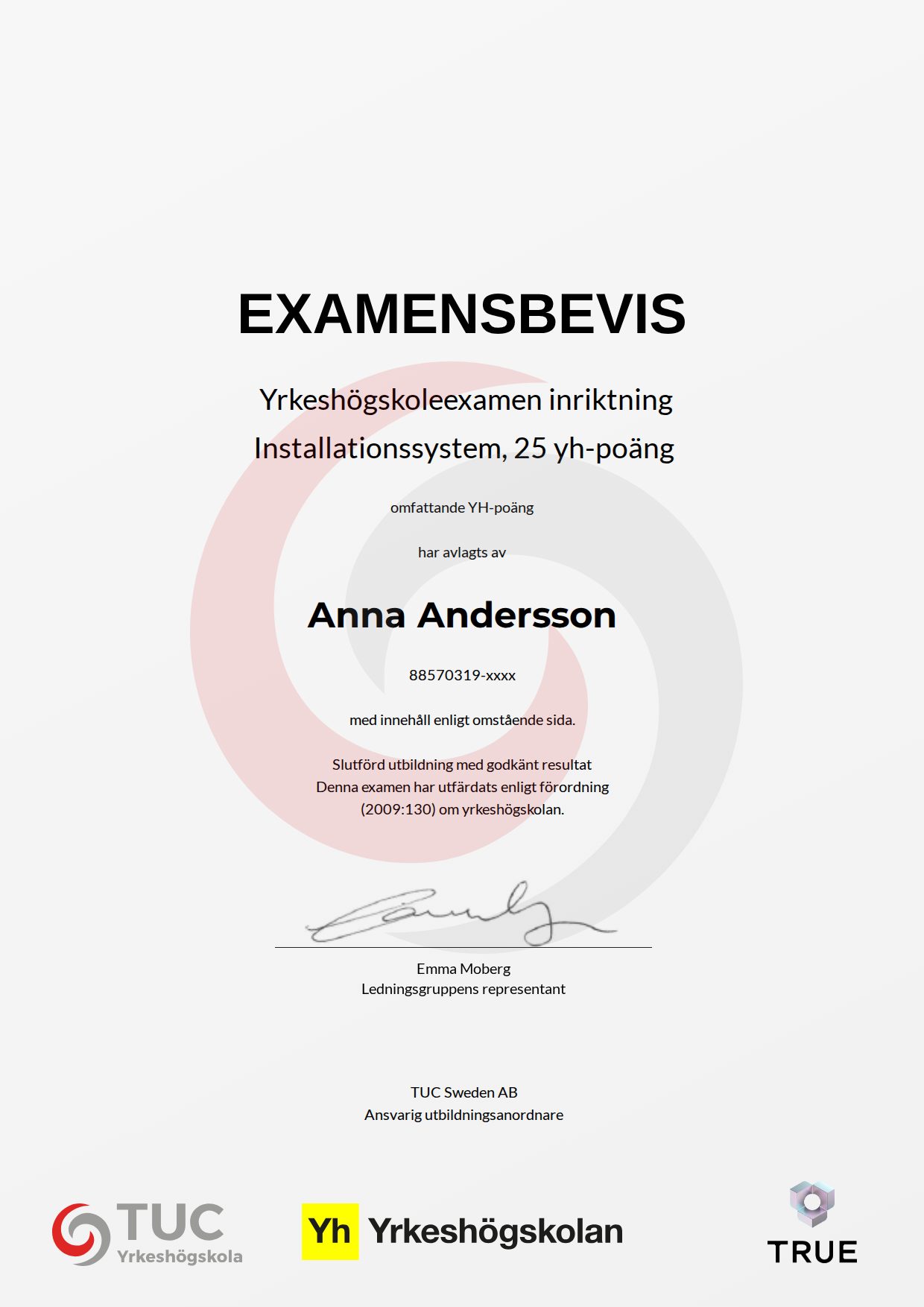
When you complete the course, TUC Yrkeshögskola issues your certificate. Your name, the course content and the issue date are encrypted and secured on blockchain, so it cannot be changed, and anyone can check that it is genuine.
100% Verifiable certificates Secured on blockchain