This course is about how to report on sustainability under the new, voluntary standard Voluntary Standard (VS). We go through how to identify relevant content, carry out a double materiality analysis, map and report sustainability risks, and create a value-creating sustainability report. We also place a strong focus on how VS relates to CSRD and ESRS, so that you as a supplier to CSRD-reporting companies can meet their requirements.
Format: On site
Language: Swedish
Request info
Want to know more before you sign up?
Send a short question and we will forward it directly to the provider.
We forward your question to Bonnier Akademi. No spam, no third parties.
About the course.
This course is about how to report on sustainability under the new, voluntary standard Voluntary Standard (VS). We go through how to identify relevant content, carry out a double materiality analysis, map and report sustainability risks, and create a value-creating sustainability report. We also place a strong focus on how VS relates to CSRD and ESRS, so that you as a supplier to CSRD-reporting companies can meet their requirements.
COURSE OBJECTIVES:
That you as a participant will:
- Understand what is happening in sustainability reporting in the EU and why expectations of transparency and data are increasing
- Be able to produce a sustainability report for your company, from materiality analysis and data collection to risk analyses and compiling the report
- Communicate sustainability in a relevant, credible and audience-tailored way
What you will learn
What you learn.
How large companies' reporting requirements under CSRD affect companies in the value chain
How to create a clear and value-creating sustainability report under the Voluntary Standard.
Carrying out a double materiality analysis
Identifying relevant content for the sustainability report
Mapping and reporting relevant sustainability risks
How you can use the report in your sustainability communication
What is happening in the EU: the EU Green Deal, the Clean Industrial Deal and how it affects companies of all sizes.
Curriculum
How the course is built.
09.00 Introduction to the course, course leader and participants
09.10 Happening in the EU: the EU Green Deal and the Clean Industrial Act
What is happening in the EU and how it affects companies.
09.30 The new legal requirements for sustainability reporting
- What the Voluntary Standard means and how it differs from CSRD
- How CSRD and CSDDD affect smaller companies through requirements from larger players in the value chain
- How companies can use sustainability reporting strategically to meet the expectations of customers and other stakeholders
10.15 Materiality analysis
A central part of the CSRD requirements is the double materiality analysis, which means identifying which sustainability issues the company affects.
- How to carry out a double materiality analysis, the heart of all sustainability work
- Impact in the value chain, financial effects (the double in double materiality analysis)
- How stakeholders can be involved
- Practical tools and exercises in doing a double materiality analysis
13.00 Risk management
Understanding and managing sustainability risks is crucial for the company's long-term success, to reduce business risks and strengthen competitiveness. In this session we go through:
- What a sustainability risk is
- How to include sustainability risks in the "ordinary" risk work
- How risk should be reported in the sustainability report
13:30 Completing the materiality analysis
- Tying it all together and prioritising material areas.
14.15 Building your sustainability report
A clear and well-developed sustainability report can strengthen your company's competitiveness and the trust of customers, investors and other stakeholders. We go through:
- How to structure a sustainability report under the Voluntary Standard, reinforced with the double materiality analysis from CSRD.
- Which content is most relevant for your company
- Step by step: we go through the parts of the report and what should be included
- Tips and tricks: good things to keep in mind, pitfalls to avoid
15:15 Smart governance of sustainability work
For sustainability work to become a natural part of the business, a clear structure and smart governance are required. In this session we focus on how to do this with limited resources.
- How to integrate sustainability into day-to-day operations
- Smart and simple ways to steer, follow up and develop sustainability work
- How you can report on governance in a way that strengthens the company's credibility
15.30 Communicating sustainability work
The foundation of sustainability communication is building and creating your own sustainability story.
- EU Green Claims: communicating sustainability in a credible way that strengthens the brand and avoids greenwashing
- How to build your company's sustainability story: vision, mission and where the company is heading
- How to make the best use of the work you have done
16.30-17.00 Summary, time for questions, close
Target audience
Who is this for?
You who work with sustainability at companies and organisations (with fewer than 1000 employees).
What "verified" means here
Verified credential.
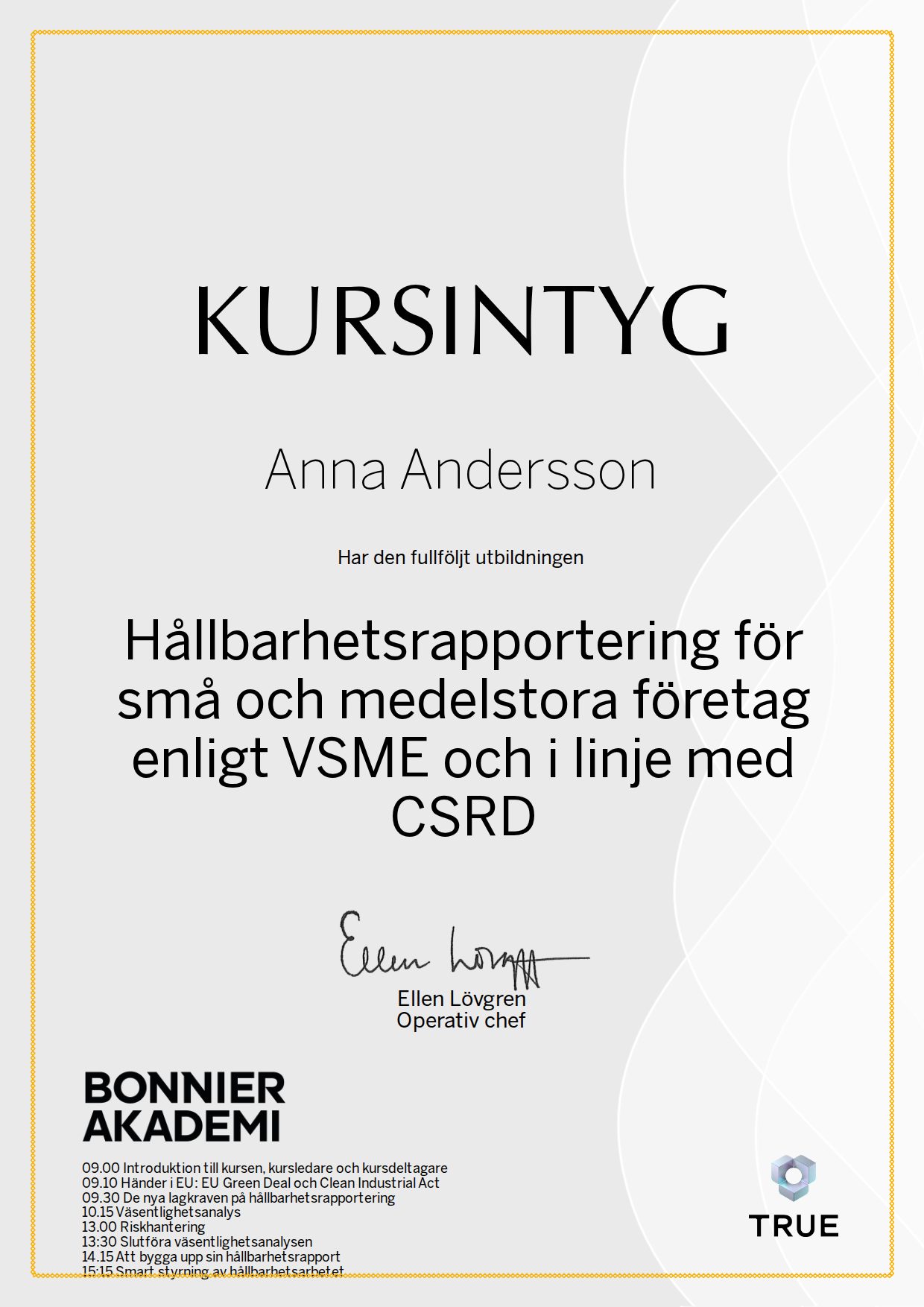
When you complete the course, Bonnier Akademi issues your certificate. Your name, the course content and the issue date are encrypted and secured on blockchain, so it cannot be changed, and anyone can check that it is genuine.
100% Verifiable certificates Secured on blockchain
 Bonnier Akademi under the brandsAktuell Hållbarhet UtbildningDi Akademi