This course is about how to succeed with the integration of two businesses after an acquisition. The aim is to give you the keys to handling cultural differences, developing an integration strategy, creating a long-term plan for the integration and getting the leadership right with new roles and leadership styles. We go through the process step by step, from Integration Due Diligence to completed integration, to realise the synergies and goals the acquisition is expected to achieve.
Format: On site
Language: Swedish
Request info
Want to know more before you sign up?
Send a short question and we will forward it directly to the provider.
We forward your question to Bonnier Akademi. No spam, no third parties.
About the course.
This course is about how to succeed with the integration of two businesses after an acquisition. The aim is to give you the keys to handling cultural differences, developing an integration strategy, creating a long-term plan for the integration and getting the leadership right with new roles and leadership styles. We go through the process step by step, from Integration Due Diligence to completed integration, to realise the synergies and goals the acquisition is expected to achieve.
The course is taught in Swedish, but the course material is in English.
COURSE OBJECTIVES:
That you as a participant will be able to:
- Carry out an Integration Due Diligence, design a comprehensive integration strategy and draw up an integration plan
- Create and implement a communication plan for the different phases of the integration, identify stakeholders and formulate key messages
- Lead the integration process through an IMO and identify and manage risks
- Handle cultural differences between the companies and succeed in uniting two companies into one
What you will learn
What you learn.
How to carry out, step by step, an integration of two organisations after an acquisition
How to do an Integration Due Diligence to understand the target company and identify obstacles and opportunities for a successful integration
Defining the expected synergies, improvements and goals to be achieved with the integration in a Value Creation Agreement
Developing an integration strategy with a timeline that includes the most important activities, resource needs, operating model, costs and risks
Communicating about the acquisition to create understanding of different corporate cultures and prevent conflicts between the organisations
How practical leadership and leadership styles are integrated successfully
Putting together a project office responsible for leading the integration process
Creating a long-term plan for the first year
Curriculum
How the course is built.
Introduction and overview of the day
Introduction of course leader and participants
Overview of the steps in the integration process
Preparations before the purchase agreement is signed, and developing an integration strategy
How to analyse how the target company fits into the company's overall strategy
How to do an Integration Due Diligence to understand the target company
How to develop an integration strategy including a timeline, the most important integration activities, resource needs, operating model, costs and risks
What applies if the transaction is large enough to affect competition in the market
How to create agreement on what generates value and synergies between the companies and clarify the integration's goals and purpose in a so-called Value Creation Agreement
Workshop on the Value Creation Agreement
Communication in acquisition integration
How to prepare communication for
- The announcement of the deal
- Day 1
- The first year
Identifying stakeholders and formulating key messages
How to communicate to create understanding of the corporate cultures and prevent conflicts between the organisations
What is specific to "buy & build" acquisition strategies
Integration of many small add-on acquisitions
Centralised vs decentralised governance model: what is important to consider
Mobilising and planning for the integration
How to launch the integration project with an "Integration Management Office" (IMO), a working group responsible for leading the integration process
How to make a plan for the first 120 days of the integration
Breaking down value and synergies into activities and actions to reach the integration goals
Managing corporate culture, leadership and change management
What the concept of corporate culture includes and how to evaluate the companies' cultures
How to handle cultural differences so that they do not disrupt the integration
How to integrate the leadership from the target company and your own company
How to prepare internally and externally for the changes that will take place
Managing and minimising risks in the integration
How to identify internal and external risks in the integration
How to minimise risks and create action plans to manage them
The most common risks and mistakes and how to avoid them
Execution, effective project management and project closure
How to carry out the integration and handle deviations and risks
How the integration can be optimised 30, 60 and 90 days after closing based on new insights
How to create a long-term plan for the first year or years
How the integration project is closed after approximately 120 days
Target audience
Who is this for?
You who will work with, lead or steer acquisition integrations, for example CEO, CFO, COO, M&A managers and, for example, HR, IT, finance and sales managers. Also you who are part of the investment team at a venture capital or private equity firm.
What "verified" means here
Verified credential.
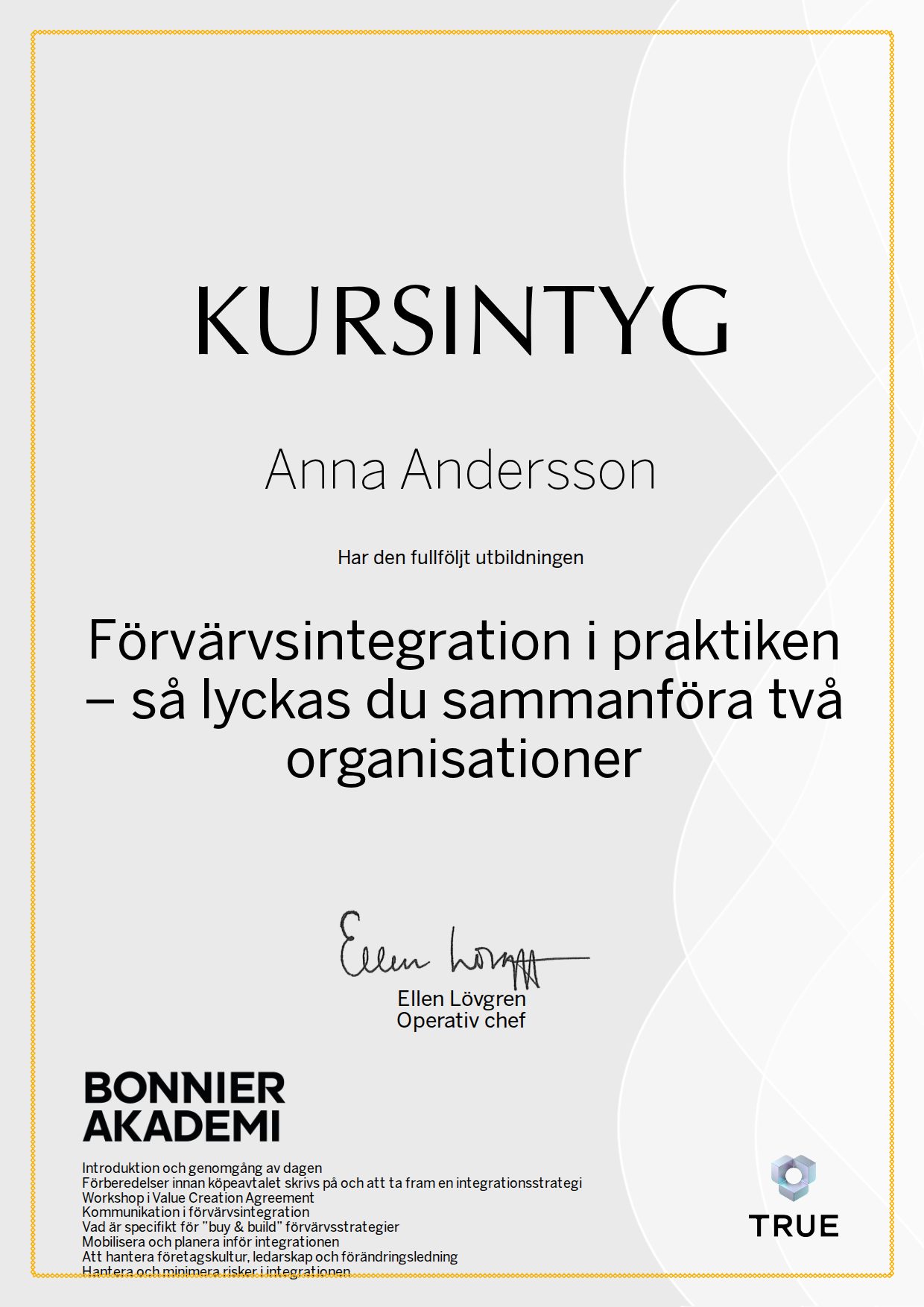
When you complete the course, Bonnier Akademi issues your certificate. Your name, the course content and the issue date are encrypted and secured on blockchain, so it cannot be changed, and anyone can check that it is genuine.
100% Verifiable certificates Secured on blockchain