Part of the YH programme Elkonstruktör at TUC Yrkeshögskola. This course cannot be applied for on its own. Programme code: ELKO23LIN.
Electric Power and Electrical Theory, 25 YH credits, gives knowledge of electrical theory and the distribution and transmission of electric power in low and high voltage networks. You learn about the design and function of the electricity network, including transformers, switchgear and relay protection, and how power quality and disturbances affect the network. The course is part of TUC's electrical design programme.
Duration: 25 h
Language: Swedish
Level: Intermediate
CSN-eligible
Time commitment: Full-time studies equivalent to 25 YH credits (about 5 weeks)
The purpose of the course is to give knowledge of electrical theory and the distribution and transmission of electric power in low and high voltage networks. The aim is for the student to have knowledge of the design of the electricity network and of the function and construction of, among other things, transformers, switchgear and relay protection. The student shall have knowledge of power quality, harmonics and other disturbances. The aim is for the student to have knowledge of and skills in carrying out energy, power, loss, short-circuit and earth-fault calculations and in dimensioning simpler low voltage networks.
The purpose of the course is to give knowledge of electrical theory and the distribution and transmission of electric power in low and high voltage networks. The aim is for the student to have knowledge of the design of the electricity network and of the function and construction of, among other things, transformers, switchgear and relay protection. The student shall have knowledge of power quality, harmonics and other disturbances. The aim is for the student to have knowledge of and skills in carrying out energy, power, loss, short-circuit and earth-fault calculations and in dimensioning simpler low voltage networks.
What you will learn
What you learn.
You have knowledge of the design, function and construction of the electricity network.
You can describe transformers, switchgear and relay protection.
You have knowledge of power quality, harmonics and other disturbances.
You can carry out energy, power, loss, short-circuit and earth-fault calculations.
You can dimension simpler low voltage networks.
Curriculum
How the course is built.
Electrical theory and power distribution
Basic principles of the distribution and transmission of electric power.
Structure of the electricity network
Transformers, switchgear and relay protection in the network.
Power quality and disturbances
Harmonics and other factors that affect power quality.
Calculations and dimensioning
Energy, power, loss, short-circuit and earth-fault calculations for low voltage networks.
Target audience
Who is this for?
The course is for YH students in electrical design.
What "verified" means here
Verified credential.
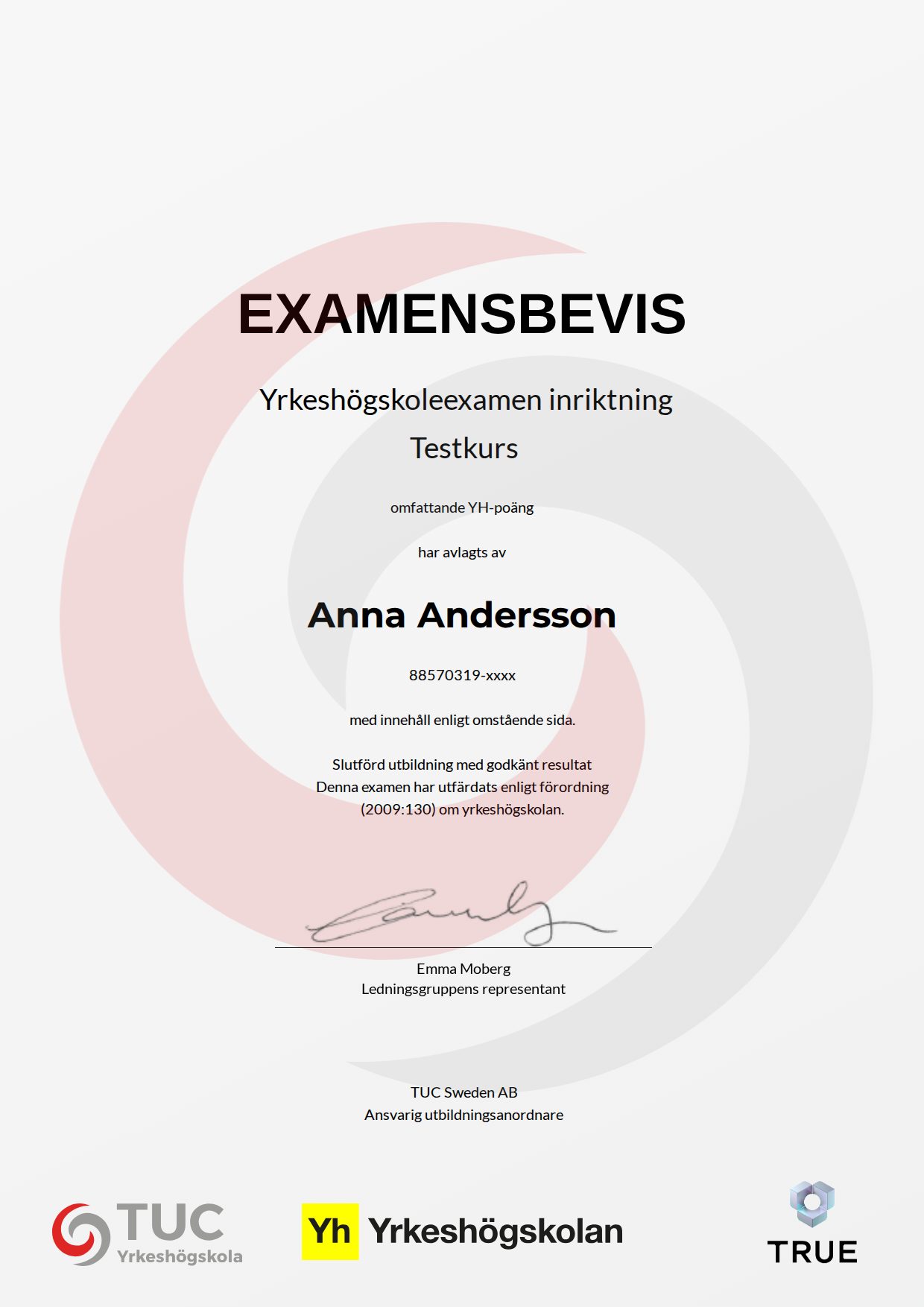
When you complete the course, TUC Yrkeshögskola issues your certificate. Your name, the course content and the issue date are encrypted and secured on blockchain, so it cannot be changed, and anyone can check that it is genuine.
100% Verifiable certificates Secured on blockchain