As head of communications you are expected to deliver on every front, from setting the long-term strategy to handling the quick decisions of everyday work. You need to build trust internally and externally, choose the right channels, understand media logic, master AI and at the same time stand firm when media storms blow. It is a complex and demanding assignment, but also a unique opportunity to influence and lead. The course will give you knowledge that lets you take your organisation's communication to the next level.
Format: On site
Language: Swedish
Request info
Want to know more before you sign up?
Send a short question and we will forward it directly to the provider.
We forward your question to Bonnier Akademi. No spam, no third parties.
About the course.
As head of communications you are expected to deliver on every front, from setting the long-term strategy to handling the quick decisions of everyday work. You need to build trust internally and externally, choose the right channels, understand media logic, master AI and at the same time stand firm when media storms blow. It is a complex and demanding assignment, but also a unique opportunity to influence and lead. The course will give you knowledge that lets you take your organisation's communication to the next level.
The purpose of this diploma course is for you as head of communications to gain insights and tools to navigate an ever-changing world and lead communication with strength and confidence, even when circumstances can change quickly.
During the course we mix theory with concrete exercises, discussions and the exchange of experience.
COURSE OBJECTIVES:
The purpose is for you to gain an exchange of experience, insights and concrete tools that strengthen you in your work and your leadership role. You also gain a qualified network of competent colleagues that you can benefit from after the course.
What you will learn
What you learn.
How the role of head of communications has changed and what is required to succeed in a changing world
Strategies for raising awareness of your issues among management and employees
Tools for preventing and handling media crises
The communication plan: why it is important and how it should be designed
Integrating communication into the organisation and strengthening the brand
The best methods for communicating change and bringing employees along on the journey
Storytelling that engages, inspires and strengthens the organisation's brand
Choosing channels and arenas to reach the right audiences with the greatest impact
How to build and maintain relationships with media, influencers and other important stakeholders
Strengthen the CEO's personal brand and showcase other spokespeople effectively
Regulations and voluntary guidelines that affect communication work
AI in communication: how AI can be used as an aid in communication work
Curriculum
How the course is built.
Welcome and introduction
Presentation of the course, the course leader and the participants
The role of head of communications in a rapidly changing world (part 1)
Factors that affect the role of head of communications now and in the future and what consequences they have for you and your organisation
The role of head of communications in a rapidly changing world (part 2)
Challenges, opportunities and critical success factors for succeeding
Digital trends and challenges in the new media landscape
Differences and similarities between working in the public and private sectors
The communication plan: is it needed and what should it contain?
A communication plan should be a support for making strategic and operational work more efficient. But how do we design it when conditions keep changing and we need to be able to act quickly on situations that arise? In this session we go through:
Which challenges communication solves
What a communication plan should contain and how to approach it when conditions keep changing
Choosing channels and arenas in the new communication landscape
How to build relationships with media, influencers and other stakeholders
Measuring communication efforts. How do we know we have succeeded?
Communication: an important ecosystem
Everything communicates, and to succeed you need to integrate communication into the organisation and the brand work. In this session we go through:
How to create a coherent communication strategy where different communication efforts support each other
The basics of change communication and the art of building and maintaining trust in the organisation
Legislation and voluntary regulations that affect communication work
CEO profiling and the art of showcasing other spokespeople
Today the CEO's (or director's) brand is a considerable part of the company's total brand equity and should be a given in a modern communication strategy. In this session we go through:
The tools for best supporting your CEO/director in that brand work
How you can support and showcase other spokespeople
The story as a weapon
Models and tools for shaping and using stories to increase engagement in the organisation and strengthen the brand
Create your own story bank
Crisis management: preventive work and actual crisis
What a crisis really is
We go through the three phases of crisis management, before the crisis, crisis management and after the crisis, and how to act in the different phases
Future competence needs for the communications department
Mapping and identifying competence and development needs now and in the future
Creating the conditions for continuous learning
Raising awareness of and commitment to your issues
How you can increase understanding of and commitment to the role of communication among management and in the rest of the organisation
Target audience
Who is this for?
The course is aimed at you who are new to the role, or already work with similar responsibilities, in both the public and private sectors.
What "verified" means here
Verified credential.
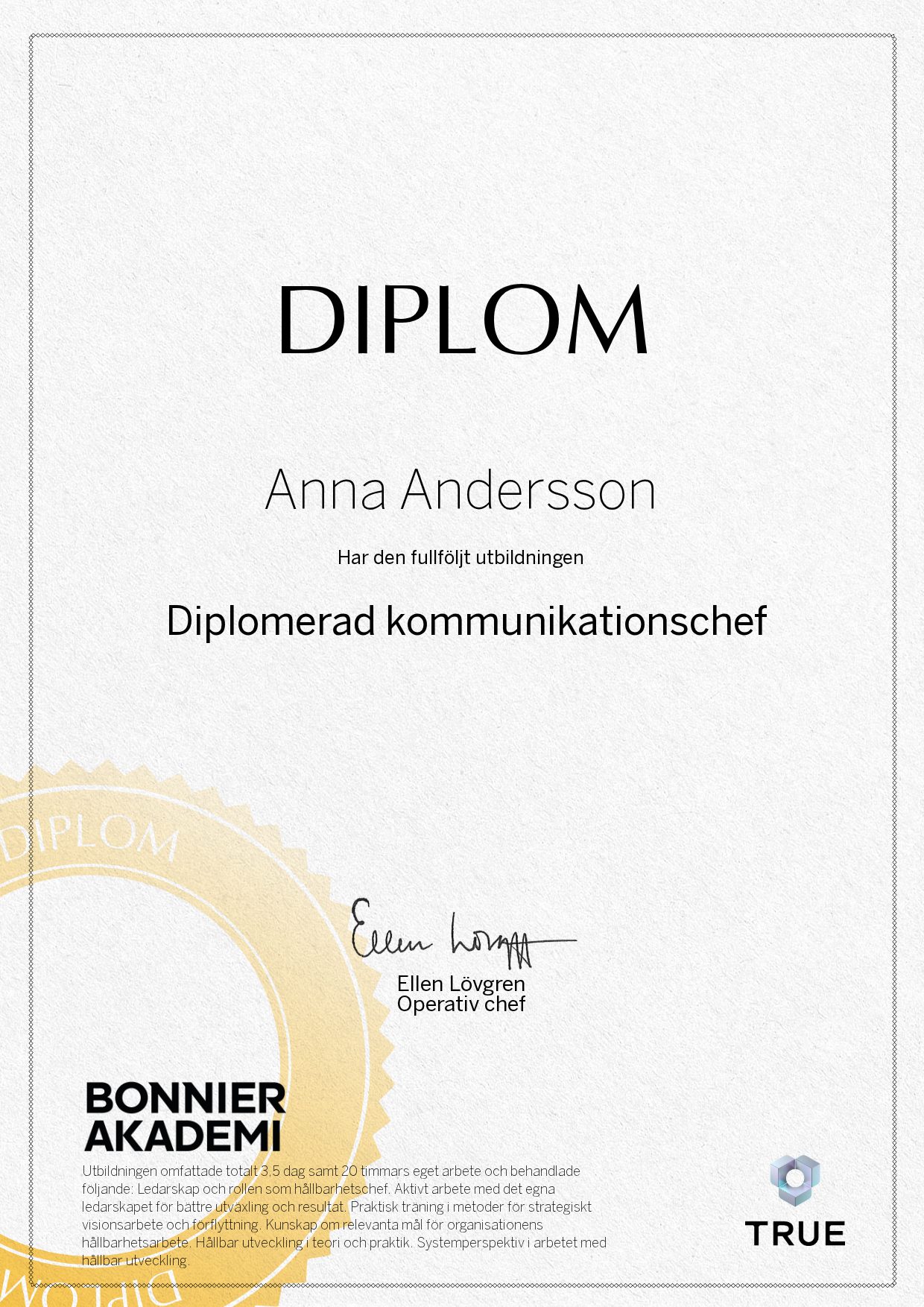
When you complete the course, Bonnier Akademi issues your certificate. Your name, the course content and the issue date are encrypted and secured on blockchain, so it cannot be changed, and anyone can check that it is genuine.
100% Verifiable certificates Secured on blockchain