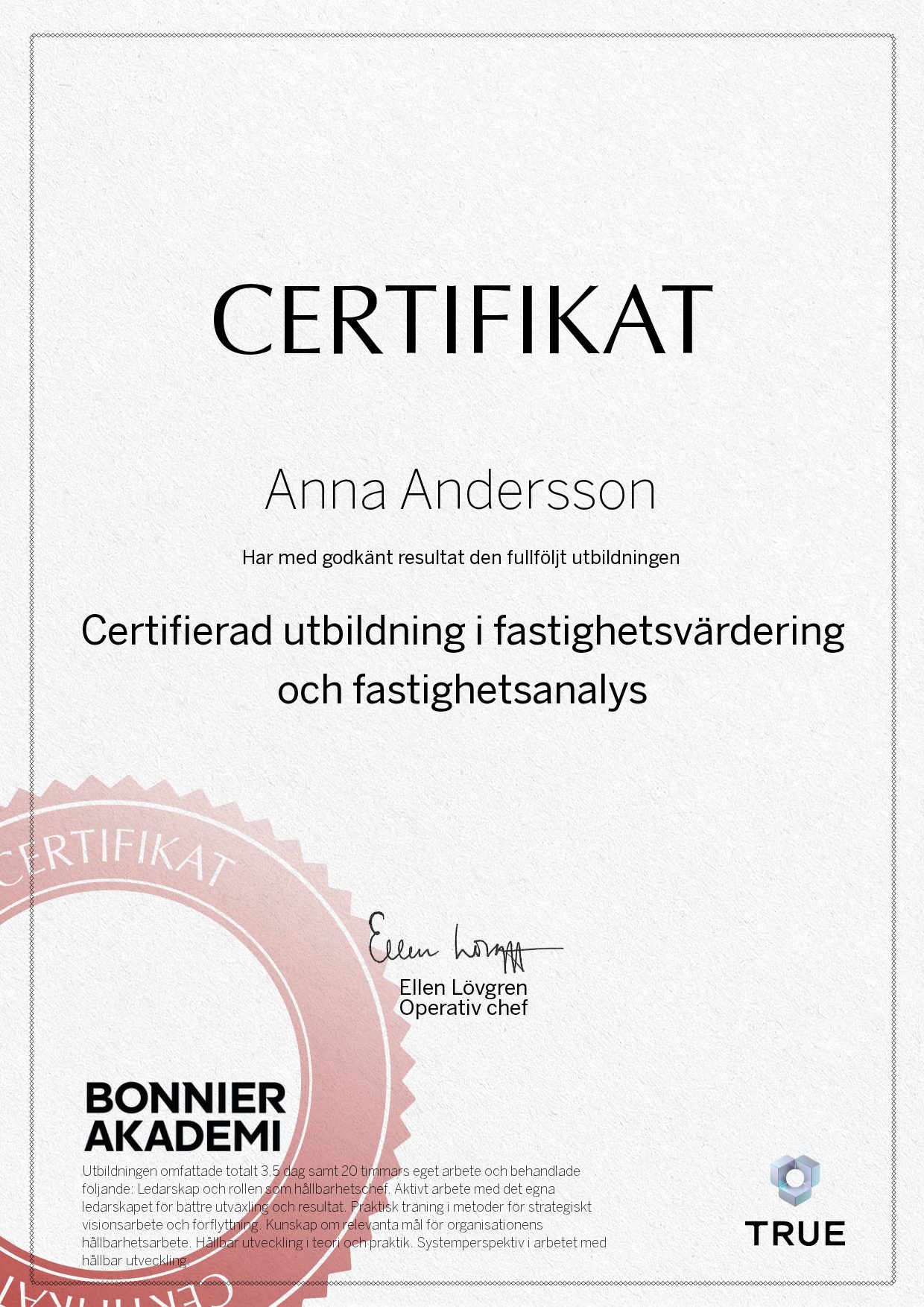
This certification course in property valuation gives you in-depth theoretical knowledge and practical experience of carrying out property valuations and property analyses using different valuation methods. We also take a deep dive into how to carry out market analyses and building condition assessments, the impact of the Planning and Building Act and the significance of architecture. The course runs for 3.5 days and includes a site visit to carry out a property inspection. The course ends with an exam. After completing and passing the course you receive a certificate.
Format: Hybrid
Language: Swedish
Request info
Want to know more before you sign up?
Send a short question and we will forward it directly to the provider.
We forward your question to Bonnier Akademi. No spam, no third parties.
About the course.
This certification course in property valuation gives you in-depth theoretical knowledge and practical experience of carrying out property valuations and property analyses using different valuation methods. We also take a deep dive into how to carry out market analyses and building condition assessments, the impact of the Planning and Building Act and the significance of architecture. The course runs for 3.5 days and includes a site visit to carry out a property inspection. The course ends with an exam. After completing and passing the course you receive a certificate.
Property Valuation and Property Analysis is a course that runs for 3.5 days. A first round of three consecutive full days (in person at the course venue) and a second round of half a day (online) about three weeks after the first round. Unlike the course "Fastighetsvärdering i praktiken" (Property Valuation in Practice), more topics are covered and at a more detailed level.
COURSE MODULES:
1. Valuation methods and valuation models
The course gives you theoretical and practical knowledge of different valuation methods and models:
- The sales comparison method: how to assess the property's qualities, choose comparable properties and assess them.
- The income method: the direct capitalisation method and the cash flow method and what they involve.
2. Project work: a practical exercise in valuing a commercial property
The course includes using your theoretical knowledge to value a property in practice, from inspecting the property to valuing it using the available valuation methods. The valuation should result in a written report of no more than ten pages and the result is presented orally.
3. How to carry out a market analysis in connection with a valuation
Assessment of the required yield, future rents, operation and maintenance, and assessment of future vacancies.
4. Building condition assessment in connection with property valuation
Which parts a building consists of, where damage is most likely to occur and how to assess the cost of such possible future damage.
5. The Planning and Building Act in connection with property valuation
We go through how the Planning and Building Act is relevant in connection with property valuation.
6. The significance of architecture
The significance of architectural quality in connection with property valuation.
COURSE OBJECTIVES:
The course has a number of specific objectives. After completing the course you should be able to:
- Carry out a valuation using the sales comparison and cash flow methods
- Explain how a market analysis is carried out
- Explain which factors create economic value (so-called value theory) and analyse how changes in these factors affect the value of the property
- Describe the difficulties and possible solutions when valuing in connection with environmental damage
- Describe what the property market means by good valuation practice
- Describe how uncertainty should be taken into account in a property valuation
CERTIFICATION:
On the last day of the course there is a web-based exam based on the lectures and the literature. If the exam is not passed, a supplementary assignment will need to be completed. During the course you will also work on a project that is presented orally.
After completing and passing the exam and the project, the participant receives a certificate.
Course literature
The course literature is the book Fastighetsvärdering och marknadsanalys together with articles and lecture material handed out during the course.
Curriculum
How the course is built.
Introduction
Description of the course objectives and activities
Distribution of literature
Review of the sales comparison method, the income method and different valuation concepts
The sales comparison method:
Assessing the qualities of the property being valued
Choosing comparable properties
Assessing the comparable properties
Review of the sales comparison method, the income method and different valuation concepts (cont.)
The income method:
The intuition behind the income method
Explanation of the direct capitalisation method
Explanation of the cash flow method
Valuation concepts:
Market value
Assessment of market value
Purchase price
Physical inspection of the property being valued
Presentation of the valuation assignment.
Inspection of the property together with the landlord or their representative. Inspection at 15.30.
Review of the sales comparison method, the income method and different valuation concepts (cont.)
Continued review of the sales comparison and income methods. Review of the production cost method.
Presentation of comparable sales systems with Fastighetsloggen's comparable sales system
A detailed description of Fastighetsloggen's comparable sales system. The system will be used in the valuation assignment.
Review of relevant market analysis in valuation
Assessment of required yields
Assessment of future rents
Assessment of operation and maintenance
Assessment of future vacancies
Work on the valuation assignment
Writing the valuation report:
Comparable sales analysis
Building a cash flow model
Writing the valuation statement
Building technology with Lars Widebeck, inspector, Compocit Consulting AB
Which parts a building consists of
Where damage is most likely to occur
How the costs of such damage are assessed
The Planning and Building Act with Eidar Lindgren, MSc Engineering, KTH
How do you know whether there are building rights on a property?
Which legal plans regulate building?
What the comprehensive plan shows
What the detailed development plan shows
The banks' view of valuations with Göran Råckle, head of property analysis, Swedbank
How the banks reason about the quality of valuations. What must be included? What is important?
Work on the valuation assignment
Writing the valuation report:
Comparable sales analysis
Building a cash flow model
Writing the valuation statement
Wrapping up the first part of the course
A short recap of the week's material
A review of what is expected regarding the exam and the valuation assignment
Exam (2h)
Review of the valuation assignment with Fredrik Brunes and Susanne Hörnfeldt, authorised property valuers, Cushman o Wakefield
Fredrik Brunes and Susanne Hörnfeldt give their view of the property being valued.
Individual review of the valuation assignment
Each group receives feedback on the valuation assignment.
Target audience
Who is this for?
Everyone who comes into contact with property valuation, for example:
- Bank employees
- Property developers
- Building contractors
- Property owners
- Future property valuers
What "verified" means here
Verified credential.
When you complete the course, Bonnier Akademi issues your certificate. Your name, the course content and the issue date are encrypted and secured on blockchain, so it cannot be changed, and anyone can check that it is genuine.
100% Verifiable certificates Secured on blockchain