Part of a YH programme at TUC Yrkeshögskola. This course cannot be applied for on its own. Programme code: KYLD21TRA.
Building physics, 15 YH credits, gives you knowledge and understanding of how a property's structure and construction affect energy use. You learn how building materials and construction affect energy use and heating and cooling demand, together with basic thermodynamics and current requirements for new buildings. You gain skills in making energy calculations such as U-values and energy losses, and in measuring areas from drawings. The course is given by TUC Yrkeshögskola within the programme Kyl- och värmepumpstekniker (refrigeration and heat pump technician).
Duration: 3 weeks
Location: Tranås
Language: Swedish
Level: Intermediate
CSN-eligible
Time commitment: 15 YH credits, remote with in-person meetings in Tranås
The purpose of the course is to give the student knowledge and understanding of how a property's structure and construction affect energy use.
The goal of the course is to provide knowledge of how building materials and the building's construction affect the building's energy use, as well as its heating and cooling demand.
In addition, students gain knowledge of basic thermodynamics and current requirements for new buildings. Students gain skills in carrying out different types of energy calculations, such as U-values and energy losses through the building envelope, and in measuring areas from drawings. Students gain the competence to calculate a building's heating and cooling demand and the ability to propose energy-saving measures.
The purpose of the course is to give the student knowledge and understanding of how a property's structure and construction affect energy use.
The goal of the course is to provide knowledge of how building materials and the building's construction affect the building's energy use, as well as its heating and cooling demand.
In addition, students gain knowledge of basic thermodynamics and current requirements for new buildings. Students gain skills in carrying out different types of energy calculations, such as U-values and energy losses through the building envelope, and in measuring areas from drawings. Students gain the competence to calculate a building's heating and cooling demand and the ability to propose energy-saving measures.
What you will learn
What you learn.
You understand how building materials and construction affect a building's energy use.
You can calculate a building's heating and cooling demand.
You know basic thermodynamics and current requirements for new buildings.
You can carry out energy calculations such as U-values and energy losses through the building envelope.
You can measure areas from drawings.
You can propose energy-saving measures.
Curriculum
How the course is built.
Building materials and construction
How construction and materials affect energy use.
Thermodynamics and new-build requirements
Basic thermodynamics and current building requirements.
Energy calculations
Calculating U-values and energy losses through the building envelope.
Measuring areas from drawings
Measuring areas and interpreting drawings.
Energy-saving measures
Proposed measures to reduce a building's energy demand.
Target audience
Who is this for?
The course is aimed at you who are studying to become a refrigeration and heat pump technician and want to understand buildings' energy use.
What "verified" means here
Verified credential.
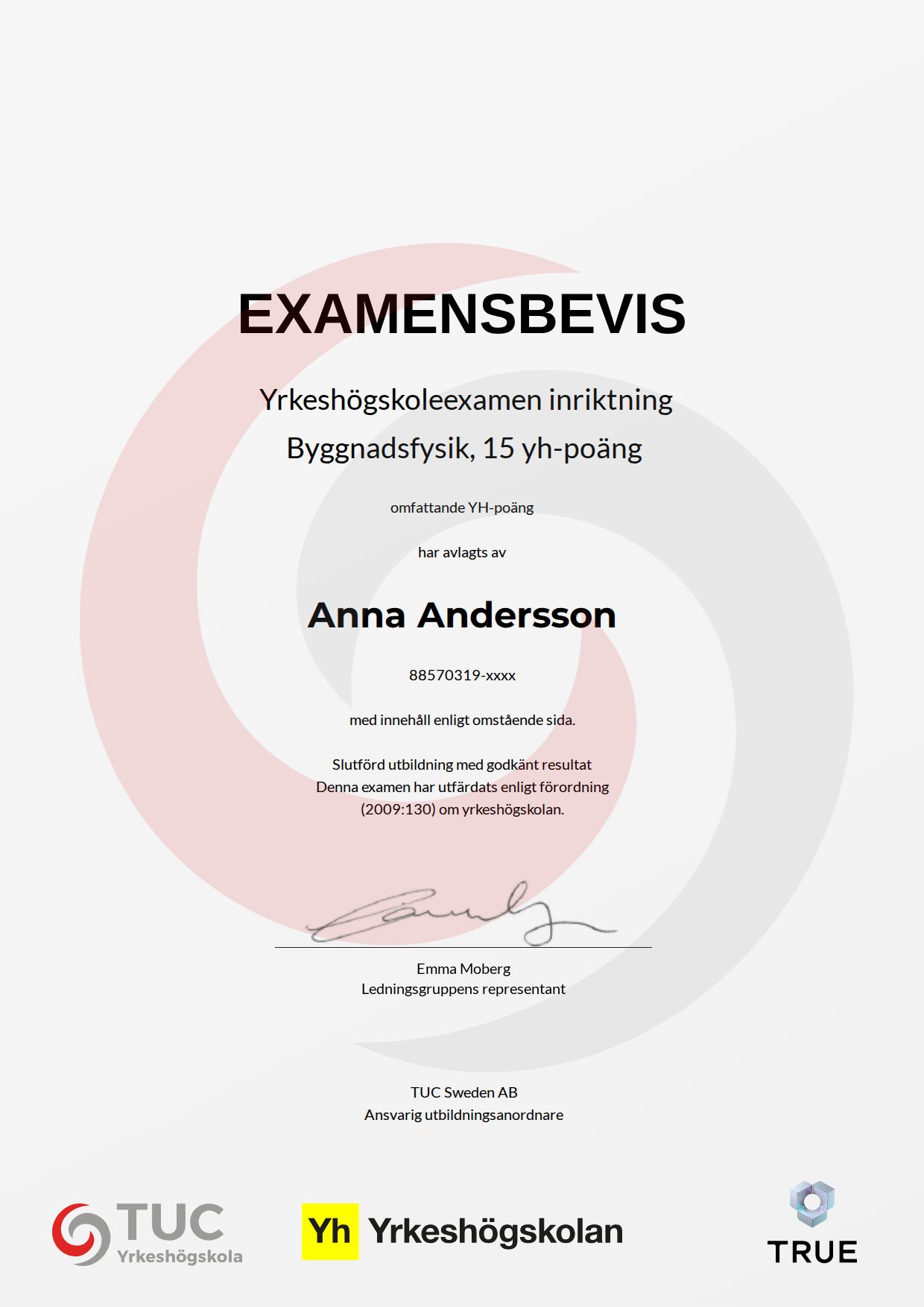
When you complete the course, TUC Yrkeshögskola issues your certificate. Your name, the course content and the issue date are encrypted and secured on blockchain, so it cannot be changed, and anyone can check that it is genuine.
100% Verifiable certificates Secured on blockchain