In the course, the student learns how day-to-day accounting is performed in business systems and how financial processes are handled in digital environments in the role of accountant. The course covers how business systems are built, system integrations and automated processes, and how these affect accounting work. The course covers how accounts receivable and accounts payable, VAT, payments, reconciliations and reports are handled in a business system. The course also addresses digitalization, AI and IT security, as well as risks and protective measures in the accounting field. The course includes practical components in which the student works in business systems with day-to-day accounting and financial processes. The course should provide the knowledge required in the accountant profession to independently perform accounting work in business systems. After completing the course, the student should be able to work with day-to-day accounting in business systems in the professional role of accountant.
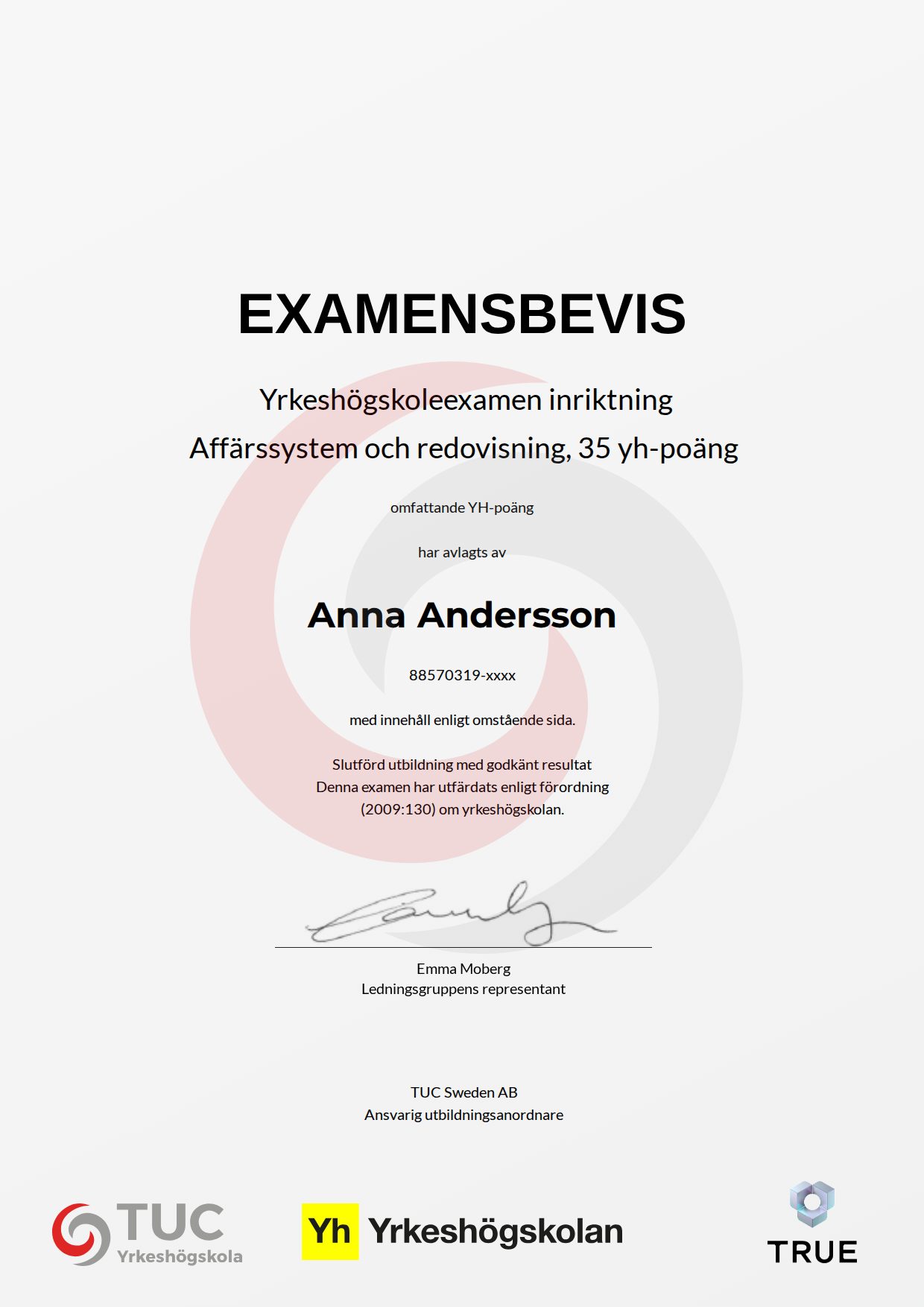
When you complete the course, TUC Yrkeshögskola issues your certificate. Your name, the course content and the issue date are encrypted and secured on blockchain, so it cannot be changed, and anyone can check that it is genuine.
Sample Credential with placeholder data. Each credential is issued with the recipient’s details and is verifiable with the provider.