In the course, the student learns business advisory with a focus on analysing financial data, identifying business opportunities and risks, and giving professional recommendations in the role of accounting economist. The course covers customer analysis, risk assessment, financial advice and customer relations. The course includes the theoretical foundations of advisory methodology and how key ratios, cash flow, profitability and working capital are used in analysis and business development. The course also covers how financial data is visualised in reports and dashboards. The course includes practical exercises where the student conducts advisory conversations and works with scenario and sensitivity analyses. The course is to provide the knowledge required in the profession of accounting economist to lead business advisory conversations and contribute to business decisions. After completing the course, the student should be able to work consultatively and proactively with business advisory in the professional role of accounting economist.
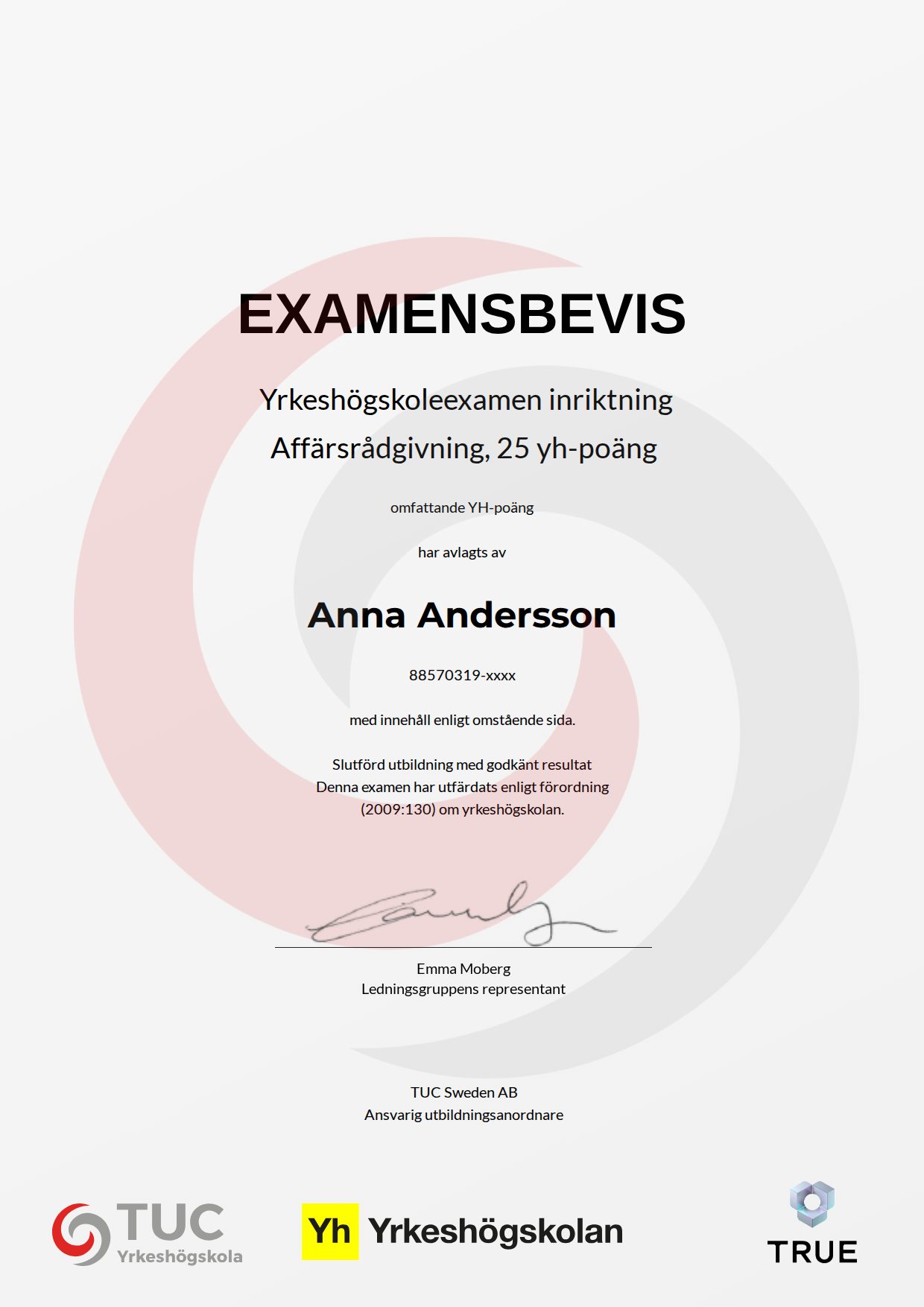
When you complete the course, TUC Yrkeshögskola issues your certificate. Your name, the course content and the issue date are encrypted and secured on blockchain, so it cannot be changed, and anyone can check that it is genuine.
Sample Credential with placeholder data. Each credential is issued with the recipient’s details and is verifiable with the provider.